

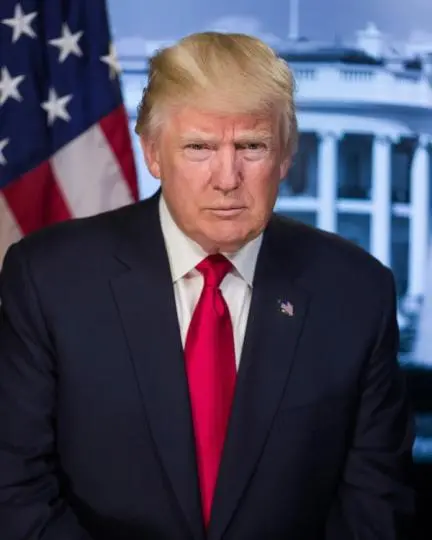
The White House has issued twin executive orders aimed at accelerating the United States' development of large-scale quantum computers while simultaneously hardening federal systems against quantum-enabled attacks on encryption. The move, signed by President Donald Trump on June 23, 2026, comes at a time when quantum computing is increasingly viewed as a potential existential risk to Bitcoin and other cryptocurrencies that rely on cryptographic algorithms vulnerable to quantum attacks.
The first executive order focuses on building quantum capabilities. It directs the Department of Energy (DOE) to host at least one advanced quantum computer, likely at one of its national laboratories, and requires the Pentagon to prioritize and field next-generation quantum sensors by 2028. These sensors could revolutionize navigation, imaging, and timing systems, with applications ranging from subterranean mapping to submarine detection.
The second order mandates a strict migration to post-quantum cryptography across all federal agencies. By 2030, agencies must secure key establishment mechanisms against quantum attacks, meaning they will need to transition from current public-key cryptography like RSA and Elliptic Curve Cryptography (ECC) to quantum-resistant algorithms. This deadline gives the government less than four years to overhaul its digital infrastructure.
Quantum Computing: A Dual-Edged Sword for Bitcoin
Bitcoin's security model rests on two cryptographic pillars: SHA-256 for proof-of-work mining and the Elliptic Curve Digital Signature Algorithm (ECDSA) for transaction signatures. A sufficiently powerful quantum computer could, in theory, break ECDSA using Shor's algorithm, which can solve discrete logarithm problems exponentially faster than classical machines. This would allow an attacker to derive private keys from public keys, effectively stealing funds from any address that has ever broadcast a transaction.
However, the threat is not imminent. Current quantum computers, even the most advanced ones like Google's Sycamore or IBM's Osprey, have only a few hundred qubits and extremely high error rates. To break Bitcoin's ECDSA, experts estimate a fault-tolerant quantum computer would need roughly 1,500 to 2,000 logical qubits, which could require millions of physical qubits given current error-correction overheads. Most projections place that milestone at least a decade away.
Nevertheless, the Trump administration's push to develop quantum technology raises the stakes. If the U.S. government accelerates quantum development, it could shorten the timeline for when such machines become capable of breaking current cryptography. This creates a paradox: the same technology that threatens Bitcoin is being championed by a president whose policy has often been supportive of cryptocurrency.
Geopolitical Context and the Quantum Race
The executive orders are part of a broader U.S. strategy to compete with China, which has invested heavily in quantum research. China has built a 66-qubit quantum computer and launched the world's first quantum satellite, Micius, for quantum key distribution. The U.S. response includes the National Quantum Initiative Act of 2018, which allocated $1.2 billion for quantum research over five years, and now these new executive orders that sharpen the focus on both offensive and defensive quantum capabilities.
The White House statement accompanying the orders emphasized the need to "lead the world in quantum computing" while ensuring that federal systems are not vulnerable to quantum attacks from adversaries. This dual mandate is reminiscent of the nuclear arms race during the Cold War, where development and deterrence went hand in hand.
Implications for the Cryptocurrency Industry
Bitcoin and other cryptocurrencies are not immediately threatened, but the industry must prepare for a post-quantum future. Several projects are already exploring quantum-resistant algorithms, such as the QRL (Quantum Resistant Ledger) that uses hash-based signatures. Ethereum's transition to proof-of-stake does not inherently address quantum risk, though Vitalik Buterin has discussed potential upgrades.
The executive order's focus on federal cryptography migration may also spur private-sector adoption. If the government mandates post-quantum standards by 2030, financial institutions, including cryptocurrency exchanges and custodians, will likely follow suit. This could accelerate the development of quantum-proof wallets and blockchains, turning a potential threat into an opportunity for innovation.
Historical Context of U.S. Tech and Presidential Actions
President Trump's interest in quantum computing is not entirely new. During his first term, his administration increased funding for quantum research and established the National Quantum Initiative Advisory Committee. However, these executive orders are the most concrete steps yet toward operational quantum systems. They also align with his administration's broader tech agenda, which includes reducing regulatory barriers and promoting American leadership in emerging technologies from artificial intelligence to hypersonic weapons.
Notably, Trump has been a vocal supporter of Bitcoin and cryptocurrency, once calling Bitcoin "an additional form of currency" and hosting a White House crypto summit. His administration also appointed pro-crypto officials, such as the acting Comptroller of the Currency who issued guidance allowing banks to custody cryptocurrencies. This makes the quantum push particularly interesting: it could either strengthen Bitcoin by forcing it to evolve, or weaken it if adversaries develop quantum computers faster than expected.
Technical Details of the Executive Orders
The first order, titled "Building Capabilities in Quantum Information Science," establishes a goal of hosting at least one advanced quantum computer at a DOE facility by 2028. It also directs the Department of Defense to field next-generation quantum sensors, including those for timekeeping and magnetic field detection, by the same year. Additionally, the order calls for a 25% increase in the number of quantum-focused Ph.D. graduates by 2030, with scholarships and research grants from the National Science Foundation.
The second order, "Mitigating Quantum Threats to Federal Information Systems," is more prescriptive. It mandates that all federal agencies must complete a cryptographic inventory by December 2026 and submit a migration plan to the National Institute of Standards and Technology (NIST) by March 2027. The order specifically requires that key establishment protocols be transitioned to post-quantum cryptography by 2030, while digital signatures for high-value systems must be upgraded by 2035. Agencies that fail to meet these deadlines face budget reassignments and potential penalties.
This timeline aligns with NIST's ongoing effort to standardize post-quantum cryptographic algorithms. In 2024, NIST selected four algorithms: CRYSTALS-Kyber for key establishment, and CRYSTALS-Dilithium, FALCON, and SPHINCS+ for digital signatures. The executive order effectively requires federal agencies to adopt these or equivalent algorithms within the decade.
Reactions from the Crypto Community
Reactions among cryptocurrency enthusiasts have been mixed. Some see the executive orders as a validation that quantum computing is a serious threat, which could accelerate the development of quantum-resistant blockchains. Others worry that government control of advanced quantum computers could be used to monitor or disrupt cryptocurrency networks, especially if those computers are paired with surveillance capabilities.
Bitcoin's price remained relatively stable following the announcement, trading around $60,145.84, up 0.14% on the day. Analysts noted that the news was largely expected and that the market has already priced in a gradual quantum transition. However, some altcoins that are more dependent on high-security smart contracts, such as Ethereum and Solana, saw slightly larger gains, possibly reflecting optimism about quantum-resistant upgrades.
The executive orders also drew criticism from privacy advocates who argue that the government's quantum sensors and computers could be used for mass surveillance. The Pentagon's push for quantum sensors, in particular, raises concerns about enhanced monitoring capabilities that could erode personal privacy. These debates are likely to intensify as the technology matures.
Long-Term Outlook: Quantum and Crypto Coexistence
The path forward involves both technological and policy developments. On the technology front, research into quantum-resistant cryptography is advancing rapidly. Lattice-based, hash-based, and code-based cryptosystems are all viable candidates, and several blockchain projects are already experimenting with them. For Bitcoin, a soft fork could introduce a new signature algorithm without disrupting the existing network, similar to how SegWit was adopted.
On the policy front, the executive orders set a national direction that will influence global standards. Other nations, including the European Union and Japan, are likely to adopt similar timelines for migrating to post-quantum security. This could create a worldwide push toward quantum-safe systems within the next decade, which would ultimately benefit cryptocurrencies by making them more resilient.
Ultimately, the Trump administration's move to develop quantum computing while hardening defenses embodies the dual nature of technological progress: it can both threaten and protect. For Bitcoin, the race is on to upgrade its cryptography before the quantum threat becomes real. The next few years will be critical for the crypto industry, as developers, miners, and users work together to ensure that digital assets remain secure in an era of quantum supremacy.
Source: Coindesk News