

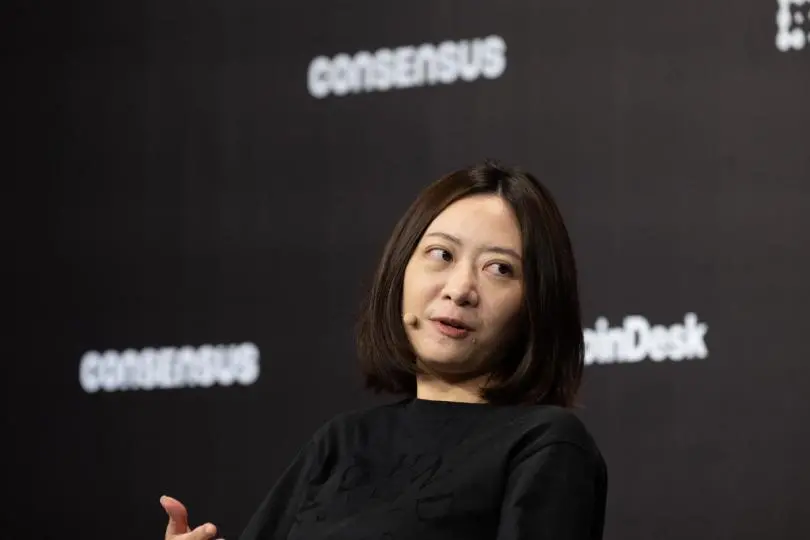
The Ethereum Foundation, the nonprofit organization that has shepherded the development of the Ethereum blockchain since its inception, is facing a wave of senior-level departures that has reignited a heated debate about its management and future direction. The latest exit came this week when co-executive director Hsiao-Wei Wang announced she would step down from her leadership role, adding to a talent exodus that has seen at least eight high-profile staff members leave over the past five months.
Wang's departure marks a significant moment for the foundation, which has long been viewed as the central coordinating body for Ethereum's technical development and community outreach. She joined the foundation in 2018 and rose through the ranks to become co-executive director in 2024, sharing leadership duties with another executive. In her role, she oversaw strategic planning, ecosystem grants, and internal operations. Her resignation, effective immediately, was announced via a post on the Ethereum Foundation blog, where she cited personal reasons and a desire to pursue new opportunities.
The wave of departures includes several key engineers, researchers, and program managers who have been instrumental in Ethereum's transition to proof-of-stake (the Merkle tree upgrade known as "The Merge"), the implementation of EIP-1559 (which reformed transaction fee mechanics), and the ongoing development of Layer 2 scaling solutions such as rollups. Among those who have left are a lead researcher in the consensus layer team, two core developers from the execution layer team, the head of ecosystem development, and the director of communications. Collectively, they represent a loss of institutional knowledge and technical expertise that some observers warn could slow down future innovations.
Community reactions to Wang's resignation have been sharply divided. On social media platforms like X (formerly Twitter) and dedicated Ethereum forums, critics argue that the talent exodus is a symptom of deep-seated management failures. They point to what they describe as a lack of clear direction, poor internal communication, and an inability to retain top talent as the foundation faces increasing competition from newer blockchain platforms like Solana, Avalanche, and Aptos. Some have called for a restructuring of the foundation's leadership, suggesting that a more transparent and meritocratic governance model is needed.
Conversely, other community members view the departures as part of Ethereum's broader push to decentralize stewardship beyond the foundation. They note that many former foundation employees have gone on to join other teams, such as the Ethereum Foundation's own client teams (e.g., Geth, Prysm, Lighthouse) or independent research groups like the Ethereum Cat Herders or the Ethereum Magicians. In this view, the foundation is not the sole custodian of Ethereum's future; rather, a distributed network of contributors—including independent developers, academic researchers, and corporate entities—now plays an increasingly central role. This argument aligns with Ethereum's core philosophy of decentralization, which aims to minimize reliance on any single organization.
To understand the significance of this exodus, it is helpful to revisit the history of the Ethereum Foundation. Founded in 2014 by Vitalik Buterin, Gavin Wood, and others, the foundation was initially responsible for everything from funding development to organizing conferences to maintaining the Ethereum protocol. Over the years, its role has evolved. After the DAO hack in 2016 and the subsequent hard fork that created Ethereum Classic, the foundation implemented stricter governance and transparency measures. The launch of Ethereum 2.0 (now just Ethereum after the Merge) represented a massive technical overhaul that required coordinated effort from hundreds of developers worldwide.
In 2022, the foundation underwent a leadership transition when longtime executive director Aya Miyaguchi stepped down and was replaced by a co-executive director structure. That structure was designed to distribute power and reduce the risk of a single point of failure, but critics contend that it has instead created confusion and inefficiency. Wang was one of the two co-executives, and her departure leaves the other co-executive, who remains unnamed in public filings, as the sole leader for now.
The foundation has also faced scrutiny over its funding model. It holds a large treasury of ETH (estimated at around $1.5 billion at current prices) and periodically sells portions to fund operations. Some community members have questioned whether the foundation is managing its treasury effectively, especially given the volatile nature of crypto markets. The foundation's spending on grants, salaries, and events has grown over the years, but critics argue that the return on investment in terms of ecosystem growth is not always visible.
Furthermore, the Ethereum ecosystem is at a crossroads. While Ethereum remains the dominant smart contract platform by total value locked and developer activity, it faces fierce competition from faster and cheaper alternatives. The rise of Layer 2 networks like Arbitrum, Optimism, and zkSync has alleviated some scalability concerns, but these layers themselves add complexity and fragmentation. The foundation's role in coordinating standards for interoperability, security, and user experience is more important than ever, yet its ability to do so is being questioned.
Wang's resignation also comes at a time when the broader crypto market is experiencing a downturn. Bitcoin has struggled to hold above $60,000, and many altcoins have seen significant losses. This market environment puts additional pressure on foundations and projects to demonstrate resilience and effective leadership. The Ethereum Foundation's ability to weather this storm of personnel changes will be closely watched by investors, developers, and the wider blockchain community.
Industry observers have drawn comparisons to other blockchain foundations that have undergone similar transitions. For example, the Solana Foundation experienced a leadership shakeup in 2023 when several key executives left, but it later rebounded with a renewed focus on performance and partnerships. The Cardano Foundation has also seen changes in its executive team, though its roadmap remains on track. Still, the scale of departures from the Ethereum Foundation is notable given its central role in the second-largest cryptocurrency network.
Looking ahead, the remaining leadership at the Ethereum Foundation will need to address several pressing issues: retaining remaining talent, communicating a clear vision for the next phase of Ethereum's development (including the upcoming Pectra upgrade and further scaling improvements), and engaging with the community in a transparent manner. Some have suggested that the foundation should conduct a formal review of its governance structure, perhaps adopting a more decentralized decision-making framework that involves key stakeholders from across the ecosystem.
In the meantime, the Ethereum community will continue to debate the implications of this talent exodus. Is it a sign of an organization in decline, or a natural evolution toward a more decentralized future? The answer likely lies somewhere in between. What is certain is that the Ethereum Foundation is at a pivotal moment, and its next moves will shape not only its own fate but also the trajectory of the entire Ethereum ecosystem.
As news of Wang's departure spreads, developers and community members are already mobilizing to propose solutions. Some are calling for a community vote on new leadership, while others are creating informal working groups to tackle specific technical challenges. The foundation itself has not announced any immediate plans to replace Wang, but sources indicate that an internal search is underway. The coming weeks could bring further clarity on the foundation's path forward.
Source: Coindesk News