

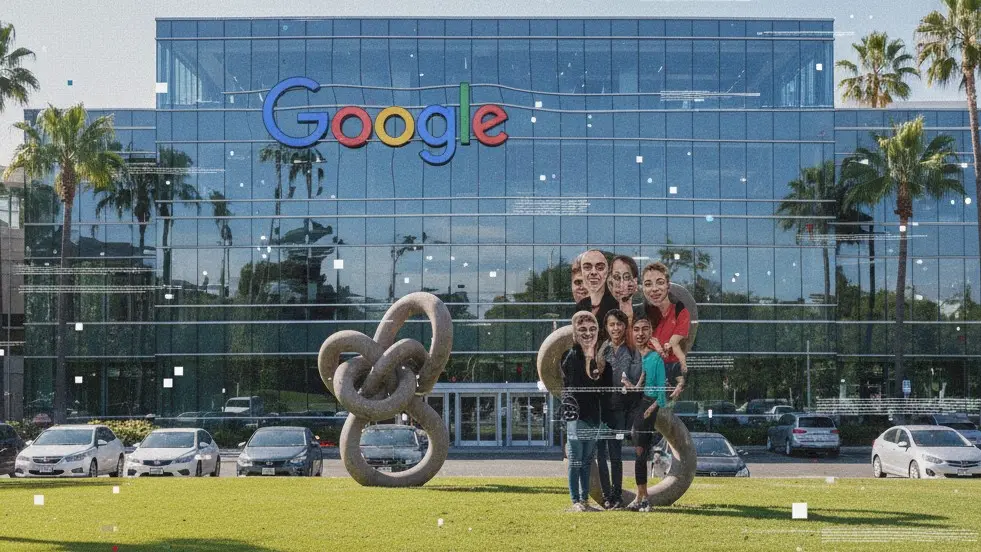
Google has announced a significant step toward transparency in digital advertising: the company will begin labeling ads that were created using generative artificial intelligence. The labels will appear in the “My Ad Center” panel, a privacy and preference hub accessible through a three-dot menu or an info icon on any ad across Google’s ecosystem. This initiative aims to help users distinguish between human-made and AI-generated advertisements, especially as AI tools become more accessible and capable of producing convincing but misleading content.
The announcement, detailed in a recent blog post, outlines a new section called “How this ad was made.” This section will disclose whether an ad was created using generative AI tools, including those provided by Google as well as third-party software. The company is also introducing new guidelines for businesses: if a company uses Google’s own AI tools, such as those integrated into Google Ads, the label will be applied automatically. For advertisers using external generative AI tools, Google now offers an optional control to voluntarily indicate that AI was involved in the ad’s creation.
This development comes at a time when AI-generated content is permeating every corner of the internet, from social media posts to news articles and advertisements. Google’s advertising network is vast, spanning YouTube, Google Search, Google Discover, and even experimental platforms like AI Mode. The sheer volume of ads makes manual oversight challenging, and AI-generated imagery, voiceovers, and even video are becoming harder to detect without technical aids. By adding a label, Google hopes to empower users to make more informed decisions about the ads they engage with.
Why AI Ad Labels Matter
The rise of generative AI has lowered the barrier to creating polished advertising content. Tools like DALL-E, Midjourney, and Google’s own Imagen can produce stunning visuals in seconds, while text-generation models like GPT-4 write convincing copy. This capability has led to a surge in AI-generated ads, some of which are used deceptively. For example, mobile games frequently use AI-generated trailers that look nothing like the actual gameplay, luring users into downloads that disappoint. Similarly, AI-generated video ads for financial products or miracle cures can spread misinformation quickly.
Google already has policies prohibiting misleading and deceptive advertising, but enforcement is reactive and imperfect. The new labeling system adds a proactive layer of transparency. According to the company, labels will appear only in the My Ad Center panel rather than directly on the ad itself, meaning users must take an extra step to view the information. However, this approach aligns with Google’s broader strategy of placing controls in a central location while keeping ad surfaces clean.
Technical Implementation: My Ad Center and SynthID
The My Ad Center panel is already available to logged-in Google users across most services. It provides options to see why a particular ad was shown, block certain advertisers, or adjust ad personalization. The new “How this ad was made” section will be nested within this panel. Google is also leveraging its existing SynthID technology, which embeds an invisible digital watermark into AI-generated images and audio created with Google’s tools. SynthID is not perceptible to the human eye but can be detected by specialized systems. While the label in My Ad Center will be a clear text disclosure, SynthID serves as an additional technical safeguard for verification.
For ads created using third-party AI tools, the labeling relies on advertiser honesty. Google provides an optional checklist that advertisers can use to confirm AI involvement. Though this is not mandatory at launch, Google hints that compliance may become part of future ad policies. The industry trend points toward stricter disclosure requirements; Meta already requires labels for political and social issue ads created with AI, and TikTok mandates tags for AI-generated content in certain contexts.
Rollout and Accessibility
The feature is being rolled out gradually. As of the announcement date, many users could not see the new section in their My Ad Center panel, indicating a staged, server-side rollout typical of Google’s approach. The company has not provided a specific timeline for global availability, but similar updates typically reach all users within a few weeks to a month. The feature will be available on desktop and mobile versions of Google services, including the Google Search app and YouTube.
Early adopters may notice the label on selected ads as Google tests its implementation. Advertisers are informed ahead of time via their Google Ads dashboard, where they can see whether their ads have been flagged as AI-generated and, if they used third-party tools, choose to add the disclosure manually.
Industry and User Reactions
Privacy advocates and digital literacy groups have largely welcomed the initiative. “Any step that gives users more information about how content is created is positive,” said a researcher from a consumer protection nonprofit. “But the real test will be enforcement. If disclosing AI use becomes a checkbox that advertisers ignore, the label loses its value.” Others point out that the label, being hidden inside a menu, may not reach the users it aims to protect. “People who are already skeptical about ads might click to see more, but the majority will never bother,” a marketing analyst noted.
Advertisers have mixed reactions. Small businesses that use AI tools for routine ads see the label as a minor inconvenience, while larger agencies worry that explicitly labeling AI use could cause users to mistrust otherwise legitimate campaigns. Proponents argue the opposite: in a landscape already saturated with deceptive ads, transparency can build long-term trust.
Historical Context: Google’s Evolving Ad Policies
Google has a long history of adapting its ad policies to emerging technologies. Over the years, it has introduced labels for political ads, election ads, and ads related to sensitive topics like health and finance. Each labeling initiative faced criticism—for being either too intrusive or not transparent enough. The AI ad label is the latest in this series. Notably, Google already restricts the use of synthetic media in political ads and requires disclosures for election ads that have been digitally altered. The new label extends this principle to all ad categories, reflecting the rapid spread of generative AI beyond politics into commerce and entertainment.
In 2023, Google updated its misleading content policy to prohibit ads that “deceptively impersonate a person or entity” using AI. The new labeling complements that rule by giving users a tool to verify if an ad is AI-generated, rather than relying solely on post-hoc reporting.
Challenges Ahead
One immediate challenge is the global nature of Google’s ad network. Different countries have different laws regarding AI disclosure. The European Union’s Digital Services Act (DSA) already requires large platforms to label certain AI-generated content. Google’s new system helps comply with such regulations, but enforcement across jurisdictions remains complex. Another challenge is user education. Many users are unfamiliar with My Ad Center or the three-dot menu. Google will likely run in-product tips to raise awareness, but adoption may be slow.
Advertiser compliance is another open question. For ads created using third-party AI tools, the system is voluntary. Unless Google makes it mandatory—possibly citing deceptive trade practices—many businesses may choose not to disclose, especially if they believe AI involvement is a competitive advantage. Google’s automated detection systems may eventually flag non-disclosed AI ads, but training such systems is difficult without a massive dataset of labeled examples.
Finally, there is the issue of generative AI used in the creative process but not in the final product. For instance, an advertiser might use AI to brainstorm ideas but write copy manually. Should that require a label? Google’s guidance is narrow: the label is for ads where generative AI was used to create the ad content itself. However, the line is blurry. As AI tools become integrated into every step of creation, the label may become either too broad (if applied loosely) or too narrow (if applied only to fully AI-generated ads).
Broader Implications for Digital Advertising
This move positions Google as a leader in ad transparency, potentially setting a standard that other platforms follow. Meta, Amazon, and smaller ad networks may feel pressure to implement similar labels. For users, the label can serve as a quick heuristic: ads with the AI label merit extra scrutiny, while those without may be assumed human-made. Over time, this could alter the psychology of online advertising, making audiences more skeptical of all ads—a double-edged sword for marketers.
As generative AI continues to improve, the line between human and machine creativity will blur further. Labels like these are an early attempt to maintain a transparent ecosystem. Whether they succeed depends on user engagement, advertiser compliance, and Google’s willingness to enforce its own rules. For now, the feature is rolling out, and users can begin checking their My Ad Center panel to see which ads carry the new disclosure.
Source: Android Authority News