

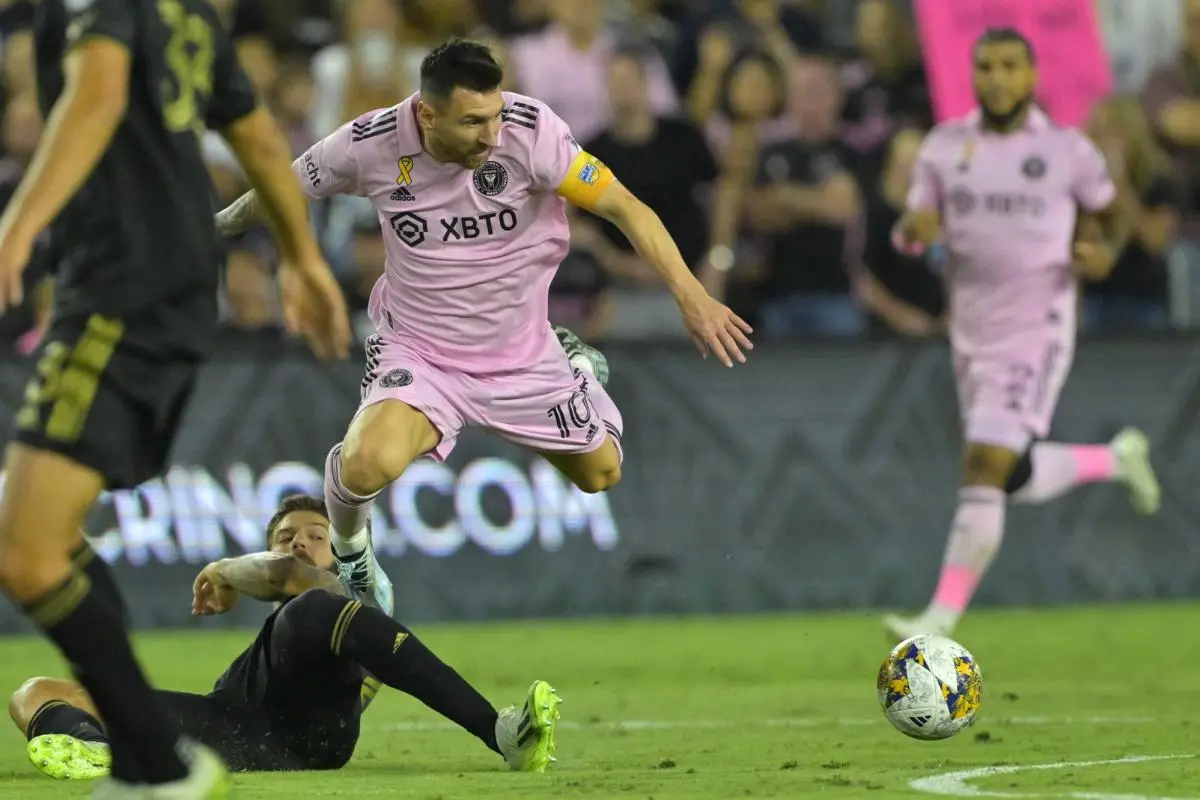
Time magazine has named Lionel Messi its Athlete of the Year for 2023, a selection that underscores a year of extraordinary achievement and seismic impact on the global soccer landscape. The Argentine captain, widely regarded as one of the greatest footballers of all time, earned the honor after a historic campaign that included winning the World Cup in December 2022, claiming an unprecedented eighth Ballon d'Or in October 2023, and dramatically reshaping the trajectory of soccer in the United States following his move to Inter Miami CF.
The decision by Time editors highlights Messi's ability to transcend sport, turning casual fans into devoted followers and driving commercial and cultural shifts wherever he goes. In its announcement, the magazine stated: "Messi has managed to do what once seemed impossible: turn the United States into a soccer country." This statement, while bold, is backed by tangible metrics that reflect Messi's gravitational pull on American sports culture.
A Year of Individual and Team Glory
Messi's 2023 began with the culmination of a lifelong dream: leading Argentina to its third World Cup title in Qatar in December 2022. In a thrilling final against France, Messi scored twice and converted his penalty in the shootout, securing a 4-2 win on penalties after a 3-3 draw. That victory cemented his legacy and fulfilled the one major trophy that had eluded him. The feat was recognized by FIFA, which named him The Best FIFA Men's Player for 2022, and by the international soccer community.
In October 2023, Messi added another Ballon d'Or to his collection, his eighth, extending his record. The award, given by France Football magazine, recognized his World Cup triumph as well as his performances for Paris Saint-Germain and later Inter Miami. At 36, Messi became the oldest player to win the Ballon d'Or since its inception, proving that age is no barrier to excellence.
The Move to Inter Miami and Its Immediate Impact
Perhaps the most transformative decision of Messi's career came in July 2023 when he chose to leave European soccer and join Inter Miami, a struggling MLS club. The move sent shockwaves through the sporting world. Overnight, Inter Miami became the most talked-about team in North America. Messi's first match, a Leagues Cup game against Cruz Azul, drew a global audience and saw ticket prices skyrocket to thousands of dollars.
In just seven appearances in the Leagues Cup, Messi scored 10 goals, leading Inter Miami to the tournament title. That victory was the club's first-ever trophy and single-handedly shifted the balance of power in North American soccer. His impact extended beyond the pitch: Apple TV, which holds a ten-year streaming deal with Major League Soccer, reported a massive spike in subscriptions following Messi's debut, according to research firm Antenna. The demand for Inter Miami match tickets and Messi jerseys reached unprecedented levels, with replica shirts selling out across the globe.
However, Messi's influence was not enough to lift Inter Miami into the MLS playoffs. The team finished second-to-last in the Eastern Conference, a consequence of starting the season poorly before his arrival and the lack of depth in the squad. But the narrative is not about failure; it is about transformation. Messi laid the foundation for future success, and the club is expected to build around him in 2024.
Beyond the Numbers: The Cultural Shift
The Time Athlete of the Year designation reflects more than Messi's on-field accomplishments. It acknowledges his role as a cultural ambassador for soccer in a country where the sport has long been a niche interest. Messi's arrival in Miami accelerated the mainstream acceptance of MLS and elevated the league's profile globally. Casual American sports fans who might have overlooked soccer began tuning in to watch Messi play, and his presence boosted viewership for regular-season matches even when he did not play.
Messi's impact also extends to youth soccer participation, merchandise sales, and tourism. Miami has become a pilgrimage site for soccer fans from around the world, and the economic ripple effect is substantial. Local businesses, hotels, and restaurants have all benefited from the "Messi effect." Apple TV's MLS Season Pass subscription numbers soared, and the league expects long-term growth in television rights and sponsorship deals.
A Career of Unmatched Consistency and Longevity
To understand why Time chose Messi, it is essential to look at his entire career. Born in Rosario, Argentina, Messi joined FC Barcelona's famed La Masia academy as a child and went on to spend 21 years at the club, winning 35 trophies, including four Champions League titles and ten La Liga championships. He holds the record for most goals in a calendar year (91 in 2012) and most Ballon d'Or wins.
After a controversial move to Paris Saint-Germain in 2021, Messi won two Ligue 1 titles and adapted to a new league and culture. His World Cup win in 2022 completed a career grand slam that includes an Olympic gold medal (2008), a Copa America title (2021), and a FIFA World Cup. He is also Argentina's all-time leading scorer and has the most international goals in South American history.
Messi's leadership style is often described as quiet but determined. He leads by example, and his teammates regularly praise his humility and work ethic. Despite the adulation, he remains grounded, often speaking about the importance of teamwork over individual accolades. This aspect of his personality has endeared him to fans worldwide.
Comparison with Other Sporting Legends
Time's Athlete of the Year list includes icons like LeBron James, Serena Williams, and Simone Biles. Messi joins an elite group, and his inclusion reflects soccer's growing importance in American culture. However, unlike many previous winners who dominated their sport domestically, Messi's influence spans multiple continents and languages. He is a global brand unto himself, with a social media following that rivals the population of most countries.
The choice also underscores a shift in how American media views soccer. For decades, the sport was dismissed as a second-tier entertainment option. But with the 2026 World Cup being co-hosted by the United States, Mexico, and Canada, the momentum generated by Messi's presence is invaluable. The league and the MLS team owners are hoping that his tenure will create a lasting legacy that outlives his playing days.
Challenges and Criticisms
No story is without its critics. Some argue that Messi's move to the United States was a retirement tour, a chance to cash in on his legacy while playing in a less competitive league. Others point out that his presence alone could have done more to elevate Inter Miami to the playoffs, and that his defensive contributions were limited. However, such critiques miss the broader picture. Messi's value to MLS extends beyond wins and losses. He is a catalyst for transformation, much like David Beckham was when he joined the LA Galaxy in 2007.
Messi himself has acknowledged that his primary motivation for moving to Miami was lifestyle and family, but his actions on the pitch prove that he still possesses the elite competitive drive. His partnership with former Barcelona teammates Sergio Busquets and Jordi Alba, as well as his rapport with coach Tata Martino, suggests that Inter Miami is building a project with long-term ambitions.
Injuries have also been a concern. Messi missed several games in the latter part of the MLS season due to muscle fatigue, a reminder that at 36, his body requires careful management. But when he played, he was spectacular, producing moments of magic that reminded everyone why he is considered the greatest.
The Road Ahead
As 2024 approaches, the soccer world watches to see what Messi will do next. His contract with Inter Miami runs through 2025, with an option for 2026. The club is expected to strengthen its squad, and Messi will likely lead Argentina in the Copa America 2024 defense. With the 2026 World Cup on the horizon, there is speculation that Messi may extend his career to play in that tournament, though he has given no definitive answer.
Whatever he decides, Messi's legacy is already secure. He has redefined the boundaries of athletic achievement and global influence. Time's Athlete of the Year award is not just a recognition of his 2023; it is a celebration of a career that has inspired millions and changed the sport forever.
Source: L'Équipe News