

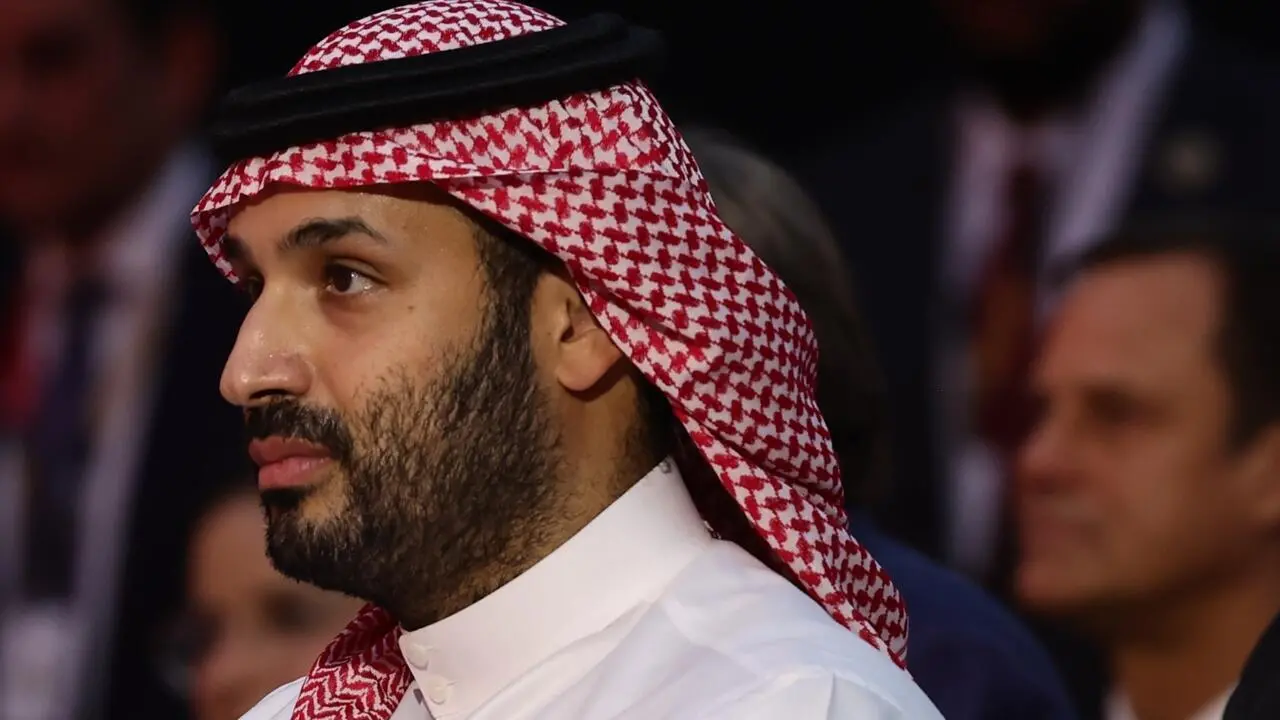
Saudi Arabia is entering one of the most uncertain periods of Crown Prince Mohammed bin Salman’s leadership, as renewed Houthi attacks, a wider regional war and mounting economic pressure converge on the kingdom. The immediate trigger is a new wave of strikes attributed to the Yemeni rebel movement, including attacks on Tuesday, 13 October, that once again put Saudi territory and strategic infrastructure on alert. For a country that has spent years trying to present itself as a hub for tourism, finance, entertainment and foreign investment, the timing could hardly be worse.
The attacks are not taking place in isolation. They come amid a broader confrontation involving the United States, Israel and Iran, a conflict that has unsettled the entire Gulf and exposed the vulnerability of the shipping lanes and energy routes on which Saudi Arabia still depends. The result is a dangerous overlap of security, economic and political risks for the crown prince, who has been the de facto architect of Saudi policy for more than a decade.
Key facts at a glance
- Crown Prince Mohammed bin Salman remains the de facto ruler of Saudi Arabia while his father, King Salman, is still alive.
- Houthi attacks attributed to the Yemeni rebel movement have targeted Saudi territory and strategic sites, including airports and oil infrastructure.
- The kingdom’s Vision 2030 reform plan is designed to reduce dependence on oil and attract foreign investment, tourism and new industries.
- The International Monetary Fund expects Saudi economic activity to contract this year, while French authorities have classified the kingdom as an orange travel destination.
- Shipping through the Strait of Hormuz has slowed, the Bab el-Mandeb route remains uncertain, and several airlines, including Air France, have suspended flights to Riyadh.
- The 2018 killing of a dissident Saudi journalist remains a stain on the crown prince’s international reputation, even though Western allies later restored ties because of strategic and economic interests.
Officially, Mohammed bin Salman does not yet reign. His father, King Salman, remains on the throne. But the crown prince has already reshaped the kingdom’s image, economy and foreign policy. Known widely as MBS, he has centralized decision-making, promoted a more socially liberal image at home and launched a series of mega-projects intended to transform the country’s future. The most important of these is Vision 2030, a plan conceived to move Saudi Arabia away from what has long been its defining export: oil.
That goal is ambitious in any circumstances. Saudi Arabia built its modern wealth on hydrocarbons, and its budget, currency, public services and political stability have long been tied to the price and flow of crude. Vision 2030 was meant to change that equation by developing new sectors, expanding the private sector, increasing women’s participation in the workforce, building tourist destinations and turning Riyadh and other cities into regional business hubs. The crown prince has presented the plan as a historic break with the past, but the project depends heavily on one condition that war can quickly undermine: confidence.
Investors, airlines, tourists and multinational companies need to believe that Saudi Arabia is stable, open and connected to the world. Houthi strikes on airports and oil installations send the opposite message. So do suspension of flights and travel advisories. When airlines cancel routes and governments warn citizens away, the damage goes beyond the immediate disruption. It affects insurance costs, business travel, hotel bookings, conference schedules and the willingness of companies to commit capital to long-term projects. For a reform strategy built on attracting foreign money and international visitors, those are serious setbacks.
The security dimension is equally troubling. The Houthis are a Yemeni rebel movement that Saudi Arabia and its allies have sought to contain for years. In 2015, Riyadh launched a military intervention in Yemen with the aim of restoring the internationally recognized government and pushing the Houthis back. Instead, the war became a costly quagmire. It produced a humanitarian catastrophe, deepened regional polarization and failed to eliminate the Houthis’ ability to strike across the border. The current attacks are a reminder that the conflict was never fully settled.
For Mohammed bin Salman, the return of Houthi attacks exposes a strategic dilemma. A massive military response risks dragging the kingdom deeper into a war it has struggled to exit. A restrained response may be seen as weakness by adversaries and may fail to deter further strikes. Meanwhile, the wider confrontation between the United States, Israel and Iran has made the regional environment more volatile. Gulf states that had tried to reduce tensions with Tehran and stabilize their neighborhood now face the possibility that their territory, airspace and energy infrastructure could become part of a larger battlefield.
The economic signals are already uncomfortable. According to the International Monetary Fund, Saudi economic activity is expected to decline this year. That forecast is a blow to a government that has spent heavily on mega-projects, sports and entertainment events, and efforts to diversify the economy. The kingdom has also been classified as an orange destination by the French foreign ministry, meaning travel is discouraged. Such advisories influence corporate travel policies and tourist decisions. The suspension of flights to Riyadh by several airlines, including Air France, adds a visible symbol of the crisis.
Geography makes the problem harder. Saudi Arabia’s main economic assets are not easily moved. Its oil exports depend on secure ports, pipelines and shipping routes. The Strait of Hormuz, through which a large share of Gulf energy exports passes, has been operating at a reduced pace. On the western side, the Bab el-Mandeb route remains uncertain because of the Yemen conflict and attacks on shipping. If both routes are perceived as risky, the kingdom’s ability to export its principal source of wealth is constrained. Analysts describe Saudi Arabia as geographically and economically blocked, dependent on oil for its main revenue but unable to guarantee the safe passage of that oil.
Vision 2030’s flagship projects are also under scrutiny. NEOM, the planned futuristic region in the northwest, and The Line, its best-known city concept, were presented as symbols of a new Saudi Arabia. The Line was originally promoted as a linear city stretching for more than 150 kilometers. Reports now suggest that the first phase may be limited to only two or three kilometers. That scaling back matters not only because of the reduced physical footprint but because of what it signals. It suggests that even before the latest security crisis, the financing and execution of the most ambitious projects were becoming more difficult.
The crown prince’s international reputation adds another layer. His reform agenda won praise from Western governments and business leaders, but it has also been shadowed by the 2018 killing of a dissident Saudi journalist. Western allies briefly turned away, then returned as strategic and commercial interests prevailed. That pattern shows how quickly condemnation can be replaced by realpolitik. But it also means that the crown prince’s legitimacy abroad remains conditional. When security and economic conditions worsen, old questions about decision-making, accountability and risk can resurface.
The regional war involving the United States, Israel and Iran has forced Gulf governments to reconsider their assumptions. For years, Saudi Arabia and its neighbors tried to reduce dependence on confrontation and to attract investment by presenting the Gulf as a stable island of business opportunity. That narrative is harder to sustain when missiles and drones are striking strategic sites and when shipping lanes are uncertain. The kingdom’s airports, oil facilities, ports and desalination plants are all part of a complex infrastructure system that cannot be fully protected against every threat.
What makes the current moment especially difficult for Mohammed bin Salman is that the crisis is arriving on several fronts at once. Security is deteriorating, economic forecasts are negative, travel links are being disrupted, flagship projects are being scaled back and the broader region is unstable. Each problem alone would be manageable. Together, they create a perception of a strategy under stress. The crown prince built his reputation on bold plans and rapid change. Now he must manage a more defensive agenda: protecting infrastructure, keeping trade routes open, reassuring investors and preventing the kingdom from being drawn further into a regional war.
For Saudi Arabia’s partners, the challenge is to decide how much of the Vision 2030 promise remains credible. Oil demand still gives Riyadh global influence, and the kingdom remains too important to be isolated. But influence does not automatically translate into the kind of foreign investment and tourism that the reform plan requires. Companies will look at travel advisories, insurance premiums and security incidents before they commit. Governments will weigh strategic ties against the risk of escalation. The crown prince’s ambitious timetable for transformation was always going to be tested by oil prices and execution. It is now being tested by war.
In the coming weeks, attention will focus on whether Houthi attacks continue, whether Saudi airports and oil terminals remain operational, whether the Strait of Hormuz and Bab el-Mandeb routes stabilize and whether foreign airlines restore flights. Those indicators will matter more than official statements. They will determine whether the current crisis is a temporary shock or a deeper turning point for the kingdom’s economic model. They will also shape how investors, tourists and regional partners judge the crown prince’s ability to deliver on his promises while managing a dangerous neighborhood.
For now, Riyadh faces a difficult balance. It must defend its territory without being pulled into a prolonged war. It must reassure markets without minimizing real security risks. It must keep oil flowing while diversifying away from oil. And it must convince the world that Vision 2030 is still investable even as the region around it becomes more volatile. The immediate test is whether Saudi Arabia can keep its airports, ports and energy infrastructure functioning while persuading markets that the reform project remains on track.
Source: RFI News