

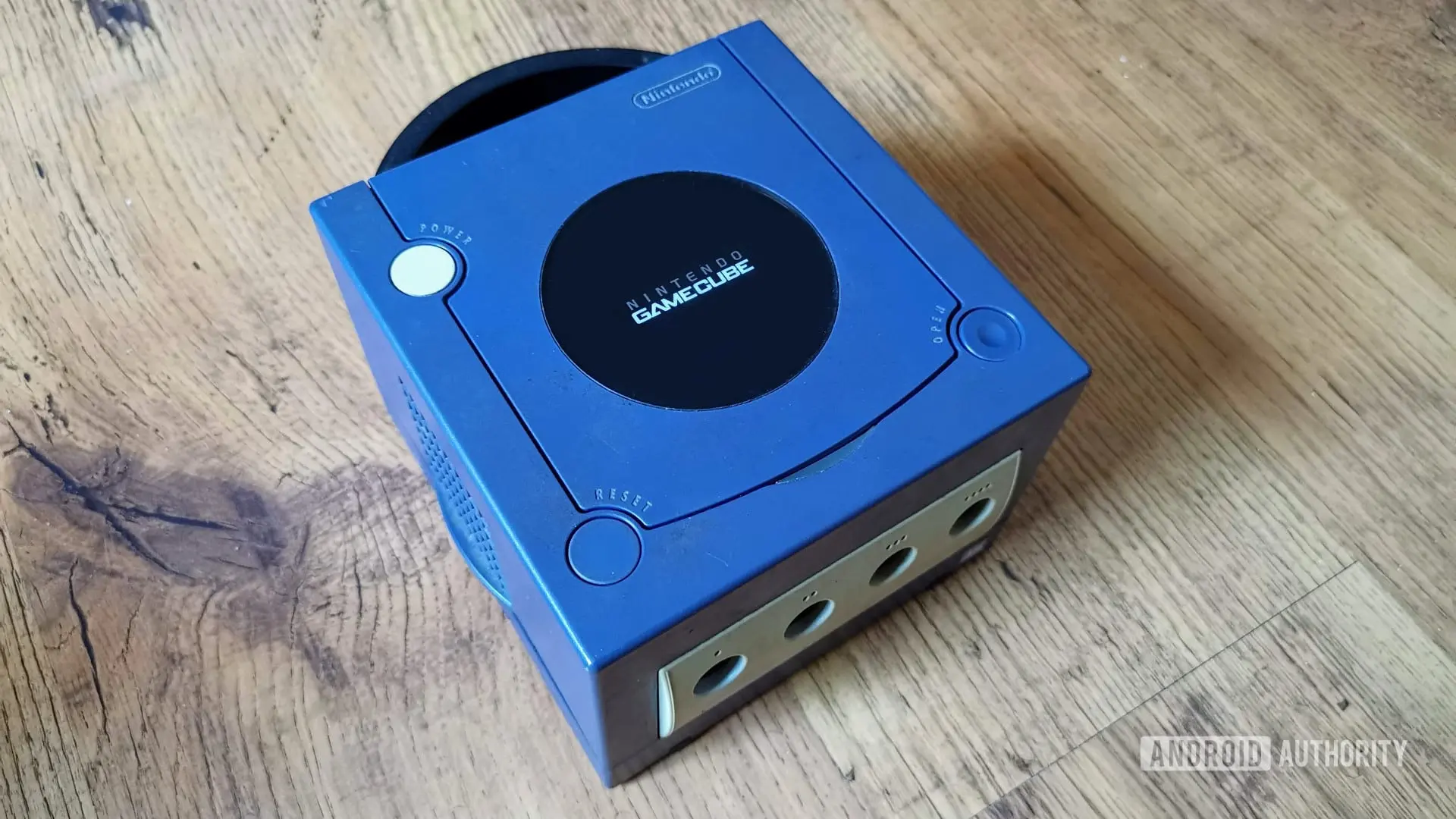
The beloved GameCube launch title Pikmin has achieved a significant milestone: its codebase has been 100% decompiled. This was announced by the GC/Wii Decompilation Discord group, marking the fifth GameCube game to reach this status. The decompilation process paves the way for unofficial fan ports to modern platforms like PC and Android, allowing players to experience the game without relying on an emulator.
What Is Game Decompilation?
Decompilation is the painstaking process of reverse-engineering a game's original machine code into a human-readable form, such as C or C++. This involves deciphering the game's functions, data structures, and logic to produce a codebase that can be recompiled for other systems. Unlike romhacking or simple patching, full decompilation creates a portable source code that can be adapted to new hardware and operating systems.
The effort required is immense. Projects often take years of collaborative work by skilled programmers who analyze disassembled binaries, rewrite functions from scratch, and verify accuracy. The result is a clean, commented codebase that can be compiled with modern compilers, opening doors for ports, mods, and even native support for widescreen displays or higher frame rates.
Why Pikmin Matters
Pikmin, released in 2001 for the GameCube, is a real-time strategy game where players control Captain Olimar to collect parts of his broken spaceship while commanding plant-like creatures called Pikmin. It was one of the system's standout titles and introduced innovative AI-driven mechanics. Despite its age, the game has a dedicated fanbase that has been eager for official re-releases. Nintendo has released only a high-definition remaster for the Wii U and a port via the Nintendo Switch Online + Expansion Pack, but many fans want a version with modern enhancements.
With decompilation, the community can now create unofficial ports that run natively on Windows, Android, macOS, and even Linux. These ports typically include features such as adjustable resolutions, support for modern controllers (e.g., Xbox, PlayStation, and Switch Pro controllers), and the ability to install mods that alter gameplay, graphics, or add new content.
Previous Decompilation Success Stories
Pikmin joins a growing list of decompiled GameCube games: Animal Crossing, The Legend of Zelda: Twilight Princess, Mario Party 4, and the N64 emulator for GameCube (which enabled other games to be played). After these decompilations, unofficial ports quickly followed. Animal Crossing was ported to ANBERNIC handheld devices, while Twilight Princess and Mario Party 4 received Windows and Android ports. The same trajectory is expected for Pikmin.
Other notable decompilation projects include The Legend of Zelda: The Minish Cap, Driver 2, and the original Jak and Daxter. These efforts have shown that decompiled codebases can lead to ports that outperform emulation in every way—speed, compatibility, and feature sets.
Advantages Over Emulation
Unofficial fan ports offer several benefits over playing the same game in an emulator:
- Performance: Native code runs directly on the CPU without the overhead of emulating a whole console, leading to higher frame rates and lower input lag.
- Graphics Options: Ports often support custom resolutions, anti-aliasing, anisotropic filtering, and even ray tracing via shader mods.
- Controller Support: Native ports can map modern controllers directly, including gyro aiming and analog triggers.
- Modding: Decompiled code is easier to mod than emulator-based ROM hacks, allowing for texture packs, new levels, and gameplay tweaks.
- Accessibility: No need to find a ROM or set up a complicated emulator; the port is a standalone executable.
For instance, the Twilight Princess PC port (OpenGL Renderer Recompiler) allows the game to run at 60 fps with stable frametimes, support ultrawide monitors, and even add improved lighting. Similarly, the Mario Party 4 port supports online multiplayer through community servers.
Potential Pitfalls: The Rise of 'Vibecoded' Ports
While decompilation projects provide a solid foundation, the actual porting to a new platform still requires significant programming skill. Recently, a trend has emerged where individuals with little to no development experience use large language models (AI) to attempt automatic porting. These so-called "vibecoded" ports are often buggy, perform poorly, and may contain security issues. They rely on AI-generated code that lacks proper optimization and error handling.
The community advises patience: wait for ports created by experienced developers who understand the decompiled codebase and can ensure stability. Several reputable teams within the GC/Wii Decompilation group are already working on high-quality ports for Pikmin, and early builds could appear in the coming weeks or months.
Legal Considerations
Decompilation and unofficial porting exist in a legal gray area. While reverse-engineering for interoperability purposes is often protected under fair use in many jurisdictions, distributing copyrighted game assets (such as textures, audio, and models) alongside the port is not allowed. Therefore, fan ports typically require users to provide their own copy of the game's data files, extracted from the original disc or ROM. This ensures the project remains legal as a tool rather than a pirated release.
Nintendo has a history of aggressively protecting its intellectual property, issuing takedowns for fan projects. However, decompilation-based ports have generally avoided direct legal action if they do not redistribute Nintendo's copyrighted material. The onus is on users to supply the game files.
Technical Deep Dive: How Decompilation Works
To appreciate the achievement, understanding the decompilation process is helpful. GameCube games were written primarily in C and C++ and compiled for the PowerPC architecture (IBM Broadway CPU). The decompilation team takes the compiled binary and uses tools like IDA Pro or Ghidra to disassemble the code. Then, they manually analyze each function, identify its purpose, and rewrite it in C with proper variable names and comments. This is repeated for thousands of functions.
The challenge is that debug symbols are rarely present, so function names are originally unknown. Teams use community knowledge, drawing from the game's behavior, memory map, and known patterns. Once a function is decompiled, it must compile back to near-identical machine code to validate correctness. This process ensures the port will behave exactly like the original.
Modern decompilation projects also create a shared codebase for multiple games. For example, the Twilight Princess and Pikmin decompilations share common library code from Nintendo's internal SDK, which accelerates progress.
What to Expect for Pikmin Ports
Based on prior releases, Pikmin's ports will likely appear first on platforms where developers are most active: Windows and Android. A typical fan port includes:
- A launcher or executable that loads the game from the user's provided data files.
- Options to set resolution, rendering backend (OpenGL, Vulkan, or DirectX), and control bindings.
- Support for analog stick camera control (originally only supported two control stick modes).
- Potential for 60fps (original ran at 30fps).
- Widescreen support (16:9 instead of 4:3).
- Mod support via a plugin system.
The decompilation team has already made the source code available on GitHub, so third-party developers can start porting immediately. Some early experimental builds may appear in the coming days, but stable releases with full feature sets are typically weeks or months away.
Impact on the Gaming Community
The decompilation of Pikmin, along with other GameCube titles, represents a shift in how classic games are preserved and experienced. Emulation has long been the standard, but native ports offer a superior user experience. This grassroots movement ensures that beloved games remain playable for generations, even if Nintendo does not release official remasters.
Moreover, decompilation projects foster education: aspiring programmers study the code to learn how professional game engines work, and hobbyists contribute improvements that benefit everyone. The community around GC/Wii Decompilation has grown into a vibrant ecosystem of developers, testers, and fans.
Final Thoughts
The announcement of Pikmin's full decompilation is exciting news for retro gaming enthusiasts. It confirms that classic GameCube titles are becoming increasingly accessible on modern hardware without emulation overhead. While excitement is warranted, patience is recommended to allow quality ports to mature. The upcoming releases will likely offer the definitive way to play Pikmin on PC and Android, with all the bells and whistles that modern gamers expect.
Source: Android Authority News