

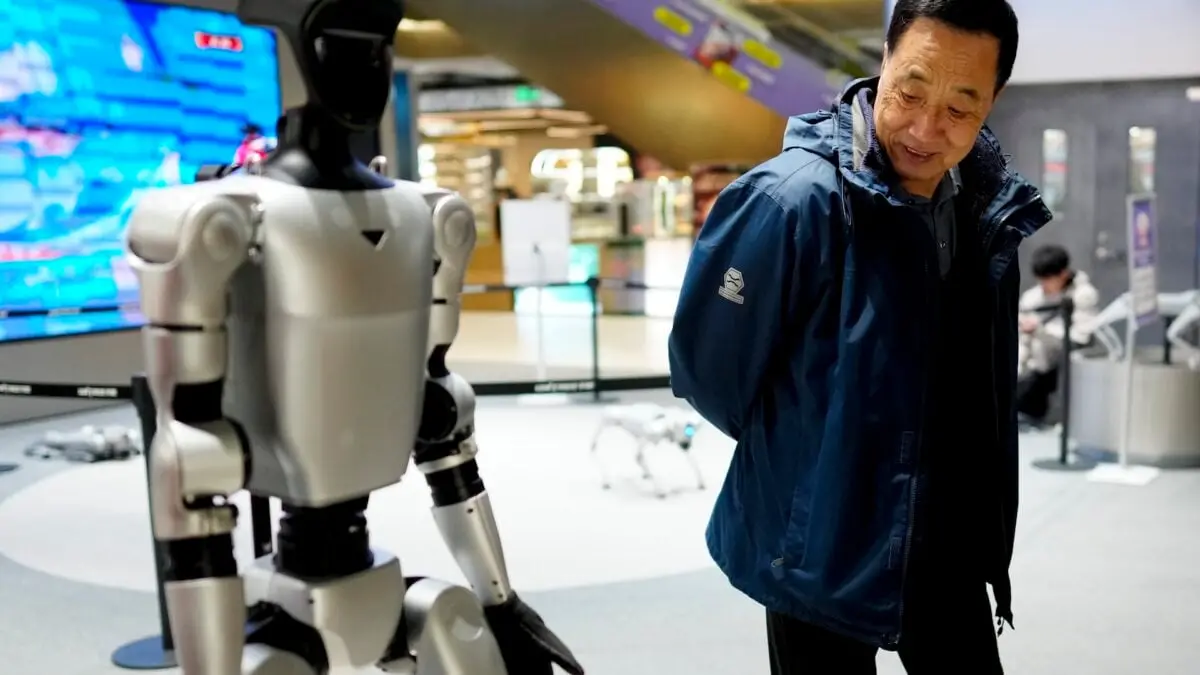
The U.S. Federal Communications Commission has announced a sweeping ban on advanced foreign-made robots, a move widely interpreted as an effort to limit the growing influence of Chinese robotics and artificial intelligence technologies in the American market. The ban applies to mobile two-legged humanoid robots and four-legged quadrupeds that the agency says pose serious risks to national security.
According to an FCC press release, these robots "pose unacceptable risks to the national security of the United States or the safety and security of United States persons." The agency cited a government study concluding that national security agencies had determined such robots could create supply chain vulnerabilities and may present cybersecurity risks. The ban is part of a broader pattern of Washington using trade and technology restrictions to slow the rise of advanced Chinese hardware and software.
Targeting China's expanding robotics sector
China has become a major force in the global robotics industry over the past decade. Companies such as Unitree Robotics have gained attention for affordable humanoid robots and quadruped robots that can walk, climb, and perform complex tasks previously seen only in research labs. Social media videos showing these robots dancing, opening doors, and even going for runs have made them popular among tech enthusiasts in the United States. Unitree opened its first nationwide physical experience store in Beijing on February 24, 2026, a sign of the company's rapid push to expand its consumer and commercial presence.
By banning foreign-made humanoid robots and quadrupeds, the FCC is effectively preventing Chinese robotics companies from selling future models in the United States. The ban does not target robots that have already been purchased, so existing owners of Unitree's robot dogs and humanoid robots will not be forced to give them up. However, future sales of these products will be subject to strict limits. This is similar to previous restrictions placed on Chinese telecommunications equipment from Huawei and ZTE, which federal agencies and many carriers were barred from using in critical infrastructure.
Comparison to the TikTok fight
This is not the first time the U.S. government has used national security concerns to justify restrictions on foreign technology. The social media platform TikTok faced similar accusations of creating supply chain vulnerabilities and posing cybersecurity risks. The Chinese-owned app was eventually forced to sell a majority stake in its American business to U.S. interests. Members of Congress from both major parties cited concerns about data collection and potential influence by the Chinese government. President Donald Trump, who had supported a ban on TikTok, later changed his position when wealthy U.S. and Middle East investors expressed interest in buying the platform. That sequence of events has convinced many observers that the government's national security argument can be selective and influenced by commercial interests.
The robotics ban follows that same logic. In the FCC announcement, the agency said the new rules were necessary to protect America's critical supply chains. But the ban also includes exemptions that weaken the claim of a total restriction. For example, the Department of Defense and the Department of Homeland Security have already granted exemptions for some power inverters made by foreign companies. Power inverters are electronic devices that convert direct current to alternating current, and they are often used in robotics systems, electric vehicles, and renewable energy installations. The inclusion of power inverters in the ban suggests that the FCC is not simply worried about robots walking around the country, but also about the electronic components that could be used in critical infrastructure.
How the ban will work
The FCC's equipment authorization process is the mechanism through which electronic devices are approved for sale in the United States. Any robot or electronic product that relies on radio frequency technology must go through this process. The new ban means that advanced foreign-made robots, including humanoid robots and quadrupeds, will no longer receive that authorization unless they qualify for an exemption. Companies are encouraged to apply for a conditional approval exemption, but it is not clear how many will succeed.
Retailers are not prevented from selling robot models that have already been approved through the FCC's equipment authorization process. That means existing stocks of Chinese robots can still be sold, and in some cases consumers may still be able to buy them from retailers. The U.S. government, however, is allowed to buy whatever overseas robots it likes, according to the release. This creates an odd situation in which the government has decided that Chinese robots are unsafe for the general public but acceptable for its own agencies to use.
Political response and broader implications
FCC Chairman Brendan Carr celebrated the move in a statement posted online Tuesday. Carr specifically praised President Trump, saying the FCC was following the president's leadership and acting in lock step with national security agencies to secure America's critical supply chains. The statement did not provide specific evidence of a Chinese robot being used in an attack or a confirmed cyber intrusion, leaving observers to rely on the government's general national security assessment.
The timing of the ban is also notable. Elon Musk's unreleased Optimus humanoid robot is expected to be a major product for Tesla in the coming years. By eliminating Chinese competitors from the U.S. market, the ban could give Optimus a clearer path to dominance in the American humanoid robot market. While the FCC did not mention Optimus in its statement, industry analysts have noted that the ban conveniently aligns with the commercial interests of Musk, who has become a close ally of the Trump administration and has repeatedly promoted the idea of humanoid robots replacing human labor in factories and homes.
There are still many unresolved questions. Will companies like Unitree be able to design robots that comply with the FCC's conditions? Could the ban be expanded to cover other types of robots, such as wheeled delivery bots or robotic lawn mowers? And how will American consumers respond to a more limited selection of robotics products? The global robotics market is expected to grow rapidly in the next decade, and the U.S. ban could accelerate the development of separate technology ecosystems in the United States and China.
The ban is not a total prohibition on all foreign robots. It is specifically aimed at advanced mobile robots with legs, which suggests that less advanced wheeled robots will still be allowed. That distinction could lead to a surge in wheeled robot development as companies seek to avoid the burdens of FCC certification. It also means that American fans of humanoid robots may have to rely on domestic products such as Tesla's Optimus, or wait for a future change in policy. The impact on China's robotics industry remains to be seen, but the symbolic message is clear: the U.S. is willing to shut its doors to foreign robots that it believes could challenge its technological supremacy.
The FCC's decision is expected to face legal challenges from affected companies and free trade advocates. Critics argue that the government has not provided enough evidence to justify such a broad restriction and that the ban will ultimately slow innovation in the United States by cutting off access to advanced foreign technology. Supporters argue that the threat of cyberattacks and supply chain vulnerabilities is real and that the government is correct to act defensively. In the meantime, the boundaries of the new policy will be tested in the coming months as manufacturers apply for exemptions and as retailers figure out exactly which models are covered.
Source: Gizmodo News