

A New Standard for Smartwatch Longevity
Samsung has quietly yet significantly raised the bar for smartwatch longevity by announcing an expanded five-year firmware support window for its latest devices, the Galaxy Watch 9 and Galaxy Watch Ultra 2. This commitment, which includes five major OS upgrades and five years of security patches, effectively guarantees software support through 2031. The announcement came from SamMobile, which cited internal Samsung communications, though the company has not yet made an official press release. The move places Samsung ahead of all competitors in the Android smartwatch space and matches—or even surpasses—Apple's unspoken five-year track record for watchOS updates.
Breaking Down the Commitment
The Galaxy Watch 9 and Galaxy Watch Ultra 2 launch with One UI 9 Watch, which is built on Google's Wear OS 7. With five major upgrades, users can expect the watches to receive One UI 10 Watch, 11 Watch, 12 Watch, 13 Watch, and 14 Watch before support is discontinued. Security patches will also roll out monthly or quarterly for the same period. This is a clear upgrade over the previous generation. Since the Galaxy Watch 4, Samsung had offered four OS upgrades and five years of security patches—a policy that itself set the standard for Android-focused wearables. Now, with the fifth OS upgrade added, Samsung extends its lead significantly.
To put this in context, Google's Pixel Watch line currently promises only three years of OS updates, while Apple does not make any official commitment but historically delivers around five years of watchOS upgrades. However, Apple's recent watchOS 27 beta unexpectedly dropped support for several older Apple Watch models, revealing the fragility of an unspoken policy. Samsung's written, public promise—even if initially reported by a third party—gives consumers concrete assurance. Additionally, the five-year security patch commitment addresses a growing concern among users about data privacy and device security over time.
Hardware Changes That Enable Long Support
One of the key reasons Samsung can confidently offer this expanded support window is the shift in the system-on-chip (SoC) used in the new watches. The Galaxy Watch 9 and Galaxy Watch Ultra 2 are powered by the Snapdragon Wear Elite processor, a high-performance chipset developed in collaboration with Qualcomm. This new chip is built with a focus on efficiency, AI capabilities, and long-term software compatibility. In contrast, older Galaxy Watch models—such as the Galaxy Watch 8, Watch 8 Classic, and the original Galaxy Watch Ultra—used Samsung's in-house Exynos SoCs. While Exynos chips are capable, they have historically required more effort from Samsung to port new Android and Wear OS updates. The move to Snapdragon Wear Elite simplifies the update pipeline and makes it easier to deliver major OS upgrades for years.
This hardware change also explains why Samsung has not committed to extending the same five-year policy to older watches. The company has not officially stated that it won't, but given the architectural differences, it is unlikely that the Exynos-based models will receive more than the originally promised four OS upgrades. Users of Galaxy Watch 8 or Galaxy Watch Ultra should not expect the same longevity, as the underlying platform may lack the necessary drivers and performance headroom for future Wear OS versions. The Snapdragon Wear Elite also brings better power efficiency, which could help the new watches maintain performance through multiple OS updates without degrading battery life significantly.
What the New Watches Offer
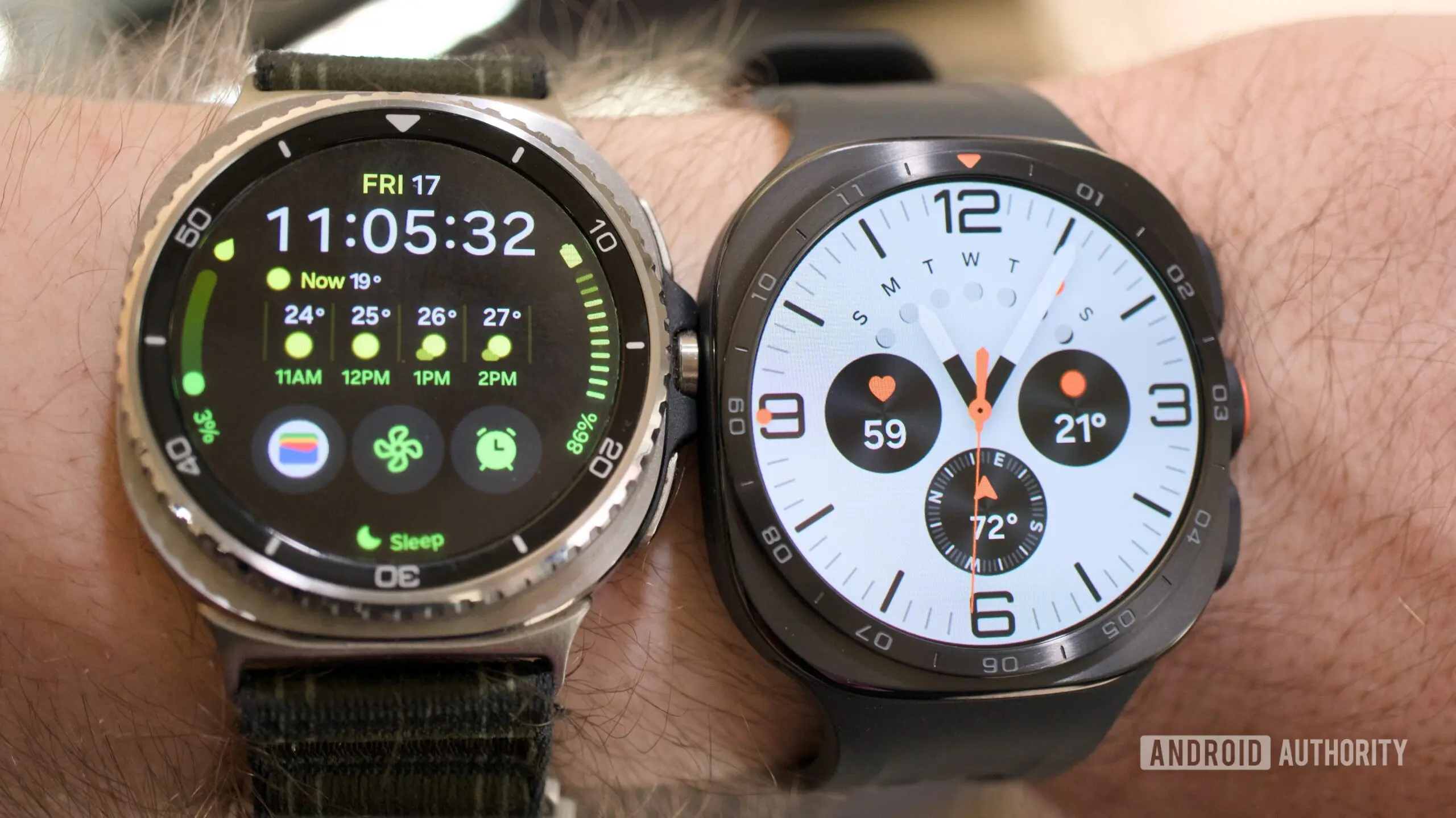
The Galaxy Watch 9 is positioned as Samsung's lightest smartwatch yet, thanks to an aluminum design that reduces weight while maintaining durability. It also features a larger battery than its predecessor, improved AI-powered health insights through Samsung Health, and Gemini's Raise to Talk feature for hands-free voice commands. The display is bright and responsive, and the watch runs Wear OS 7 with the new One UI 9 Watch interface. The Galaxy Watch Ultra 2, on the other hand, is built for extreme conditions. It boasts a titanium construction, a 5,000-nit display that is readable even in direct sunlight, and an 800mAh battery that can last up to several days on a single charge. It also includes advanced outdoor features like depth gauge for diving, route navigation, and a custom action button. Both watches are available for pre-order now, with prices starting at $379.99 for the Galaxy Watch 9 and $699.99 for the Galaxy Watch Ultra 2.
Industry Implications and Consumer Benefits
Samsung's expanded support policy is a win for consumers who want to invest in a premium smartwatch without worrying about obsolescence. The wearable market has historically lagged behind smartphones in terms of software update commitments. Most Android smartwatches receive only two to three years of OS updates, and even the best-in-class devices like the Galaxy Watch 5 were limited to four. By extending to five major OS upgrades, Samsung is signaling that its wearables are now on par with its flagship Galaxy S series phones, which have similarly offered five years of OS upgrades since the Galaxy S24. This parity is important because many users keep their smartwatches for longer than their phones—often four or five years—so having consistent updates during that lifespan is critical.
Furthermore, the move pressures competitors like Google and Fitbit to improve their own commitments. The Pixel Watch 3, expected next year, may need to offer at least four OS upgrades to stay competitive. Apple, while not obligated to change its approach, may feel the heat as Samsung matches its five-year practical support window with a clear, upfront promise. For the broader Android ecosystem, this could spur Qualcomm and Wear OS to standardize longer update guarantees across all OEMS.
Potential Limitations and Questions
While the five-year commitment is commendable, some questions remain. First, Samsung has not clarified whether the security patches will be monthly, quarterly, or ad hoc. Five years of patches sounds generous, but if they only arrive biannually, the practical benefit diminishes. Second, the commitment applies only to the Galaxy Watch 9 and Galaxy Watch Ultra 2, not to the Galaxy Watch 9 series as a whole—what about the rumored Galaxy Watch 9 Classic? If that model uses a different chip, it might not receive the same support. Samsung has also not specified whether the five-year clock starts from the launch date or the purchase date, which can affect resale value. Finally, the longevity of the battery over five years is a concern. Even if software is updated, a degrading battery could make the watch less usable. Samsung offers battery replacement services, but the cost and inconvenience might deter users from keeping the watch that long.
Nevertheless, this move is a positive step for the industry. As smartwatches become more integral to health monitoring, payments, and communication, software updates are essential to fix bugs, patch vulnerabilities, and introduce new features. Samsung's decision to extend support for its latest watches is a recognition that wearables are no longer disposable gadgets but long-term companions.
Source: Android Authority News