

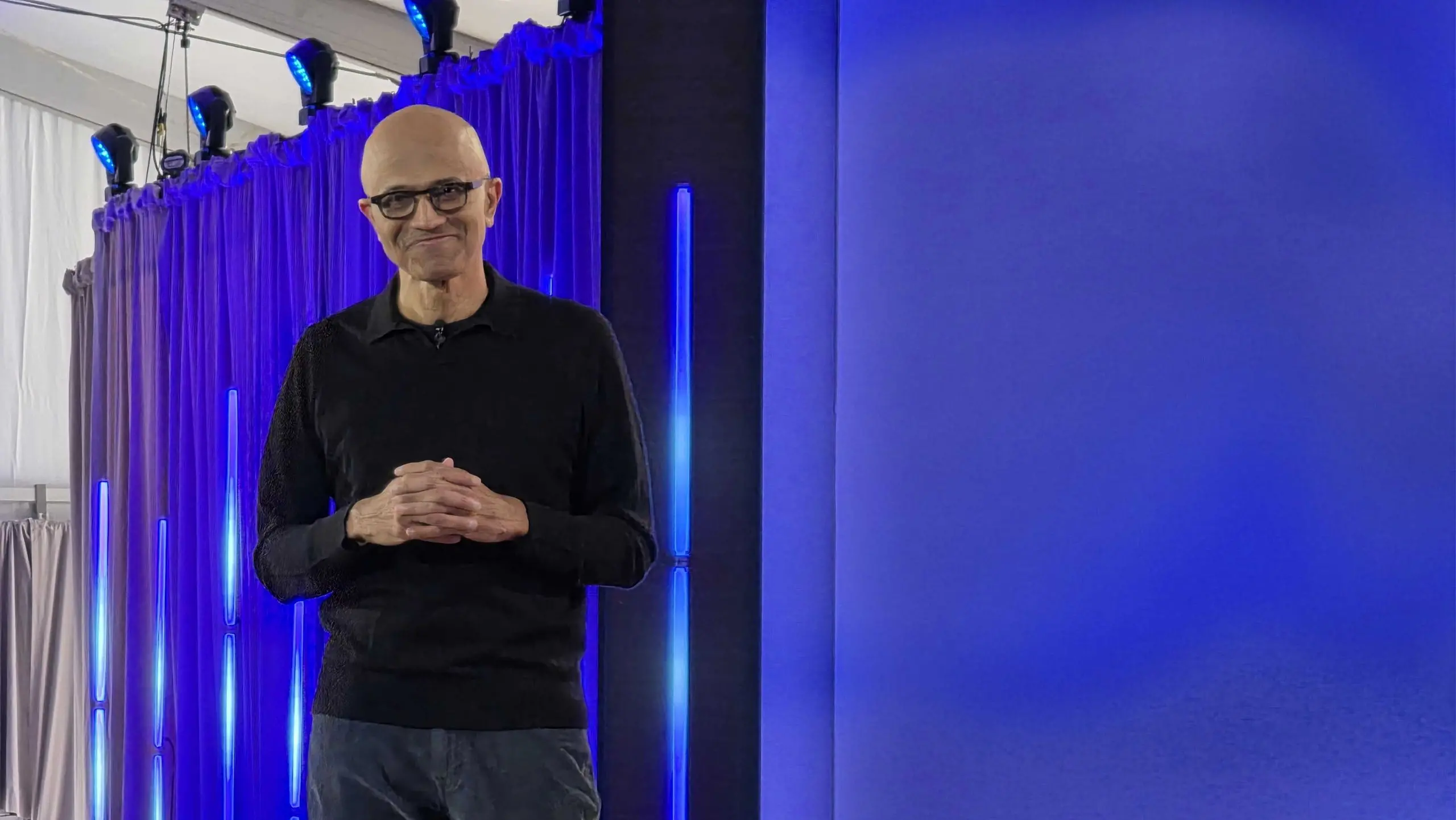
In a moment that resonated across the technology world, Microsoft chief executive officer Satya Nadella delivered a powerful reminder of what drives progress: "Our industry does not respect tradition – it only respects innovation." The statement, made during his tenure as one of the most influential leaders in modern computing, was more than a slogan. It was a declaration of principles from a man who reshaped one of the largest companies on earth, moving it away from the comfort of past success toward the uncertainty of future invention.
Nadella's words come at a time when artificial intelligence is rewriting the rules of business, when cloud computing has become the backbone of the digital economy, and when the gap between those who adapt and those who hesitate has never been wider. For Microsoft, the quote is not abstract philosophy. It is a description of the company's own journey since Nadella took the helm in 2014.
A Leader Forged by Change
Satya Nadella was born in Hyderabad, India, in 1967, and graduated with an electrical engineering degree before moving to the United States for graduate studies. He earned a master's degree in computer science from the University of Wisconsin-Milwaukee and later an MBA from the University of Chicago Booth School of Business. Before joining Microsoft in 1992, he worked at Sun Microsystems, a company that would eventually serve as a cautionary tale for the very industry Nadella now leads. Sun's failure to anticipate the shift to commodity hardware and open-source software became a lesson in the dangers of resting on traditional strengths.
At Microsoft, Nadella spent more than two decades working across engineering and business leadership. He led the company's cloud and enterprise group, a division that would become central to its revival. In that role, he oversaw the launch and growth of Microsoft Azure, the company's public cloud computing platform, and built relationships with enterprise customers that would anchor Microsoft's future revenue. These experiences gave Nadella a deeply practical understanding of how innovation works: not as a single dramatic breakthrough, but as a steady, disciplined process of anticipating customer needs and reimagining old products for new realities.
When Nadella was named CEO in February 2014, he inherited a Microsoft that was profitable but struggling to find its identity. The era of the Windows monopoly had passed. Personal computers were no longer the center of the technology universe. Smartphones, social platforms, and cloud-native startups were defining the future, and Microsoft appeared to be watching from the sidelines. Its failed mobile efforts and the disastrous acquisition of Nokia's phone business had left the company playing catch-up. Nadella's challenge was not simply to improve products, but to change the culture that had produced them.
Rewriting Microsoft's Mission
One of Nadella's first and most famous actions as CEO was to refocus Microsoft's mission statement. The old mission of putting "a computer on every desk and in every home" was replaced with a more ambitious goal: to empower every person and every organization on the planet to achieve more. The shift was subtle but profound. It moved the company's center of gravity away from personal computing and toward the cloud, artificial intelligence, and the broader needs of the global economy. In his book "Hit Refresh," Nadella described the need to move from being a "know-it-all" culture to a "learn-it-all" culture, a phrase that has since become a cornerstone of his leadership philosophy.
Under Nadella, Microsoft embraced open source, a decision that would have been unthinkable in earlier decades. The company released Windows code, acquired GitHub, and made its development tools available on rival platforms. It also began to partner aggressively with former competitors. This new openness was not a betrayal of Microsoft's past, but a recognition that innovation requires collaboration. Nadella understood that no company, no matter how powerful, could control the entire technology stack in a world of diverse devices, clouds, and development frameworks.
Financially, the transformation produced extraordinary results. When Nadella took over, Microsoft's market valuation was roughly $300 billion. In 2024, the company briefly became the most valuable publicly traded company in the world, with a market capitalization above $3 trillion. Azure grew into the second-largest cloud infrastructure platform in the world, competing directly with Amazon Web Services. Microsoft's commercial cloud revenue, which was about $4.4 billion annually when Nadella became CEO, exceeded $100 billion in recent years. The company's productivity and business process division, including Office and LinkedIn, also benefited from a consistent push toward subscription-based and cloud-connected services.
The Meaning Behind the Quote
The quote "Our industry does not respect tradition – it only respects innovation" speaks to a fundamental truth of technology markets. Companies are valued not for what they have done, but for what they can do next. Many of the giants that once dominated technology have faded because they failed to recognize this principle. Digital Equipment Corporation, once a leading computer maker, saw its advantage evaporate with the rise of personal computers. Yahoo had the infrastructure and resources to lead in internet search, but it faltered against a more innovative rival. BlackBerry controlled the smartphone market for years, yet could not adapt when touchscreens changed consumer expectations. These examples serve as warnings to every technology leader, including those inside Microsoft.
Nadella's statement also carries a deeper message about leadership. In traditional industries, stability and consistency are often rewarded. In technology, the old ways are perpetually threatened by new entrants, open standards, and changing user behavior. A product that works well today can become irrelevant tomorrow. A business model that delivers record profits can be upended by a startup with a different approach to distribution or design. The only sustainable defense is a willingness to abandon what no longer works and to experiment with what might work next.
Leading the Artificial Intelligence Wave
Perhaps no part of Nadella's tenure better illustrates his commitment to innovation than Microsoft's aggressive move into artificial intelligence. In 2019, Microsoft invested $1 billion in OpenAI, the creator of ChatGPT. In 2023, the company deepened that partnership with a multi-billion-dollar investment, promising to integrate OpenAI's models into its consumer and enterprise products. The result was Copilot, an AI assistant embedded in Windows, Microsoft 365, GitHub, and Bing. Microsoft was widely seen as the first major software company to bring large language models into the mainstream of everyday work by aligning its products around AI capabilities.
The AI push has also involved building one of the world's most powerful supercomputers to train large-scale models, as well as deploying specialized chips and data-center infrastructure. Nadella has described AI as an opportunity to "equalize access" to knowledge and a way to solve some of humanity's biggest challenges. But he has also acknowledged the risks, calling for guardrails and responsible AI development. His approach to AI again reflects the idea that innovation must be paired with a sense of responsibility. It is one thing to develop a powerful new technology; it is another to create a framework that allows society to benefit without being harmed.
In his quote, Nadella did not say that tradition has no value. Rather, he pointed out that tradition alone is not enough. The history of Microsoft under his leadership is full of examples where the company returned to old ideas with a new lens. Windows was reinvented as an operating system that works seamlessly across laptops, desktops, and cloud-connected devices. Office was reinvented as a subscription service that updates itself continuously and works on mobile phones and web browsers. Even the Windows development process was changed to be more iterative, with features released to consumers through test programs and feedback channels.
Innovation as a Culture
One of the central insights of Nadella's leadership is that innovation cannot be delegated to a single research lab. It must be embedded in every part of an organization. Microsoft under Nadella created a more inclusive and agile engineering culture, breaking down the silos that had previously separated product teams. It celebrated experimentation and tolerated failure when failures were genuine learning opportunities. It also put a new emphasis on customer empathy, pushing engineers to observe how people and businesses actually use technology, rather than assuming that technical brilliance would automatically produce successful products.
This cultural shift did not always make headlines, but it mattered. Engineering teams were encouraged to ship smaller updates more frequently, moving away from the old model of massive, infrequent releases. Data-driven decision making became central to product development. The company's hiring and promotion practices were redesigned to reward curiosity and collaboration, not just technical expertise. Nadella also made a point of developing other leaders inside Microsoft, ensuring that the company's innovative momentum would not disappear if he were to step away.
The Global Impact of Nadella's Vision
The quote from Nadella has been especially influential among entrepreneurs and business leaders outside the software industry. It has been cited in speeches about digital transformation, organizational renewal, and the challenges facing established companies in every sector. Manufacturers, banks, educational institutions, and health care organizations have all been forced to recognize that digital innovation is not optional. In that sense, Nadella's words have become a kind of rallying cry for the modern economy. Companies that treat technology as a cost center and tradition as a competitive advantage are increasingly exposed to disruption.
Nadella's own career provides proof that innovation can come from unexpected places. He did not found a startup or create the world's most famous consumer gadget. Instead, he worked patiently for more than two decades inside one of the oldest and largest software companies. When he reached the top job, his advantage was not charisma but a clear-eyed understanding of where the industry was going. He had already lived through several technology cycles and had watched companies rise and fall. That perspective allowed him to see that Microsoft's future would not be secured by defending Windows alone, but by leading in cloud computing, artificial intelligence, and developer tools.
As the technology industry continues to evolve, Nadella's words are likely to remain relevant. The next wave of innovation may come from breakthroughs in quantum computing, augmented reality, robotics, or entirely unknown fields. Whatever the source, the companies that succeed will be those that remain humble enough to learn, bold enough to experiment, and disciplined enough to let go of the past. Microsoft, under Nadella's leadership, has embodied that mindset in ways that few large technology companies have managed. Its rise from a legacy software vendor to a leader in the new era of AI is a case study in practical innovation.
In the end, the quote "Our industry does not respect tradition – it only respects innovation" is not a criticism of the past. It is a reminder that the past cannot carry the future. Nadella has spent his career proving that principle, not merely with words, but through the relentless reinvention of one of the most important companies in modern history. His statement will continue to inspire managers, engineers, and entrepreneurs to ask a simple question: what are we doing today that will still matter tomorrow? That question, more than any single product or service, defines the true spirit of innovation.
Source: TechRadar News