

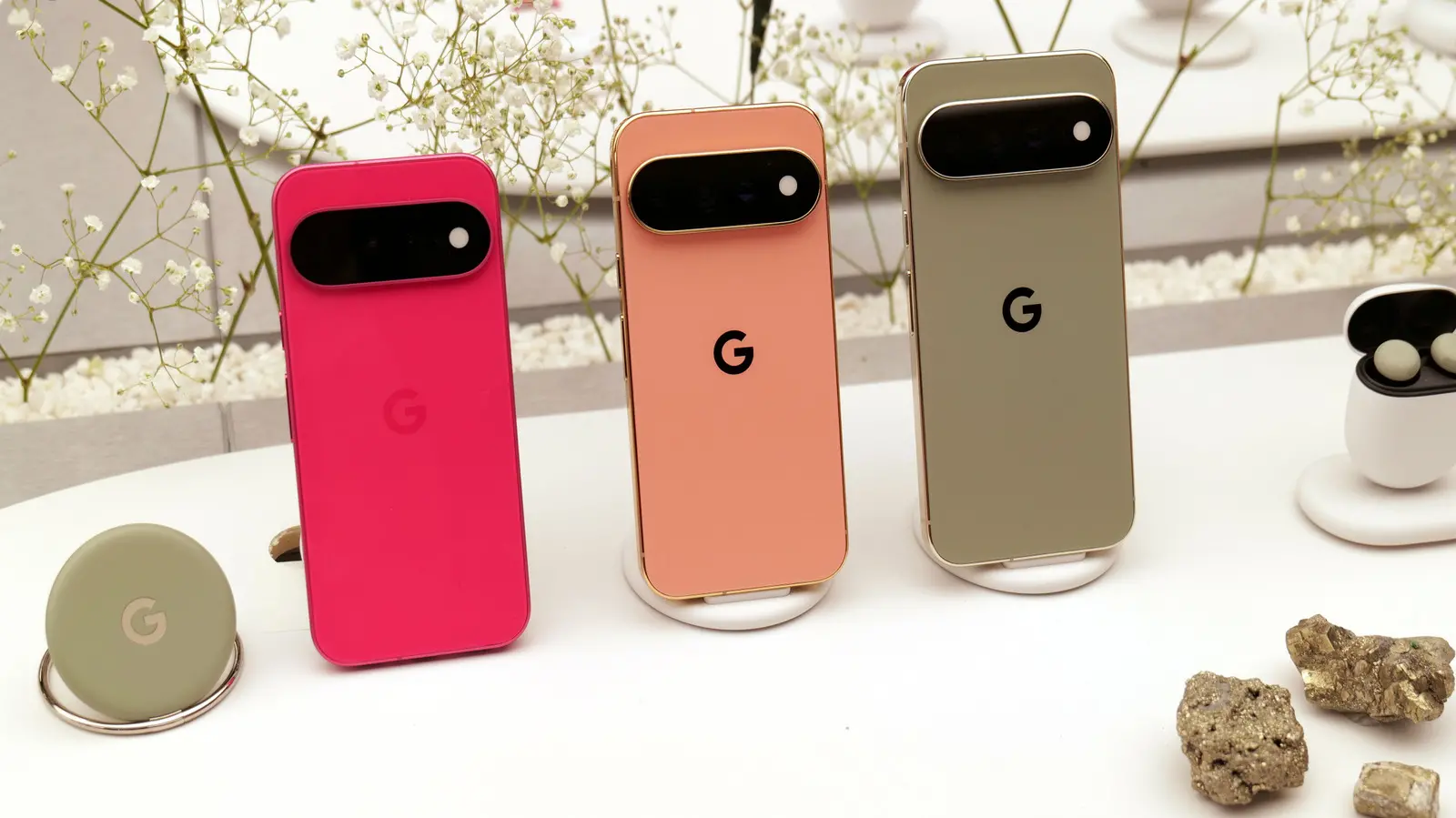
Google's Pixel 11 lineup is here, and this year's story is less about raw hardware and more about software that anticipates what you need before you ask. With memory costs having climbed sharply over the past year, Google has put its resources into making the Pixel 11 devices smarter, more helpful, and more proactive. The core of that effort is an upgraded version of Gemini Intelligence, the computer-use agent that Google first showed off earlier this year ahead of I/O 2026.
Proactive assistance in everyday apps
One of the headline features is the ability for Pixel 11 phones to generate glanceable cards inside the apps you already use. These cards appear contextually, based on whatever is happening on screen. If a friend messages you about an upcoming trip, for instance, a card can surface with your flight details and tell you whether the flight is on time or delayed. No need to open a separate airline app or search your email.
Google says this kind of proactive help will show up in many more places across the phone. The system might suggest saving an event to your Calendar, sending a location to Maps, or adding relevant information to Google Wallet, such as membership numbers from airline or hotel apps. These suggestions are designed to feel natural and timely rather than intrusive.
Another scenario Google highlighted involves texting about dinner plans. If you are discussing where to eat with a friend, your Pixel 11 can step in and offer to secure a reservation on your behalf. This goes beyond simple reminders or app shortcuts; the phone is actively performing a task that would normally require you to jump into another app and complete a multistep process.
Location-based suggestions arrive as a preview
The Pixel 11 family also launches with a preview of a feature that delivers proactive suggestions based on your physical location. As an example, imagine you are waiting for a seat at a new restaurant. The lock screen might show a notification with insights about the restaurant, including details about the menu and even suggestions for the best seat to get a good view. This kind of ambient assistance is a major step toward the always-aware phone that many companies have been promising for years.
Google notes that some of these features may require a subscription for higher usage. That is an important detail, as it signals that the most advanced AI assistance may not be entirely free forever. Subscription tiers could become a recurring part of the Pixel experience, especially as Google continues to invest heavily in AI models and cloud infrastructure.
What is Gemini Intelligence?
Gemini Intelligence is Google's AI system designed to understand and act across apps. It was first introduced as a computer-use agent, meaning it can observe what is on your screen and take actions based on that context. With the Pixel 11, Gemini Intelligence is woven deeper into the operating system. It is not just a chat app that you open when you want help; it is a background layer that tries to be useful at the moment you need it.
The shift to proactive assistance represents a change in how people interact with smartphones. Instead of pulling out the phone, typing in a query, and waiting for a response, the phone is already paying attention and offering help before you ask. This has potential benefits in terms of convenience and efficiency, but it also raises questions about privacy. When a phone is constantly analyzing your messages, your location, and the apps you use, users need to trust that the data is handled responsibly.
Google has said that the features are designed to work on-device where possible, but some advanced tasks may require cloud processing. Users will likely have control over which permissions they grant and can turn off specific proactive suggestions if they feel uncomfortable. The company did not provide details about all the privacy controls in the announcement, but these details are expected to emerge as reviewers spend more time with the devices.
Sign language support through SL2T
Beyond proactive notifications, Google is expanding how people can interact with its phones. DeepMind, Google's AI research laboratory, has created a sign-language-to-text model called SL2T that will debut first on the Pixel 11 line before coming to other devices. The model allows deaf and hard-of-hearing users to sign at their phone to perform tasks such as searching the web, writing messages, and conversing with Gemini.
This is a significant accessibility milestone. While speech recognition and voice assistants have become common, sign language recognition has lagged far behind. The SL2T model aims to close that gap by giving sign language users a way to interact with a smartphone using their primary language. The fact that it debuts first on Pixel 11 suggests Google is treating it as a flagship feature, not an afterthought.
The underlying technology is complex. Sign language involves hand shapes, movements, facial expressions, and gestures that all convey meaning. The SL2T model needs to process continuous signing and translate it into text quickly enough for real-time conversation. Google says the model has been designed to handle the nuances of sign language, and it will improve over time as more users provide data.
Magic Capture camera tool
No Pixel launch would be complete without a new AI-powered camera feature, and this year's is called Magic Capture. The tool uses a combination of models to help you capture fleeting moments. When you are about to photograph a smiling baby or a fast-moving scene like a buzzer-beating three-point shot, you simply tap one button. Google's models analyze approximately 400 frames and select or synthesize the perfect 12-megapixel snapshot.
Magic Capture automatically applies edits, so the final image looks polished without requiring manual adjustments. You can also get a video without switching modes, meaning the phone is continuously recording short bursts of frames that can later be combined into a short clip. This is a clever way to combine still photography and videography, and it should be especially useful for parents, sports fans, and anyone who has ever missed a great photo because the moment passed too quickly.
The 400-frame analysis is notable because it suggests the Pixel 11 is doing a significant amount of on-device processing. By analyzing so many frames, the phone can choose the sharpest moment, the best expression, or the peak of the action. This is a form of computational photography that has become a hallmark of Google's Pixel line, and Magic Capture looks like one of the most ambitious versions yet.
The broader Pixel context
The Pixel brand has always been about marrying hardware and software. Over the years, Google has introduced features like Night Sight for low-light photography, Call Screen for spam detection, and Now Playing for music identification. Pixel 11 continues that tradition, but with a heavier emphasis on AI agents that can take action.
The decision to focus on software is also a practical one. Memory costs have risen sharply, making it more expensive to pack high-end components into a dedicated device. By leveraging AI and cloud resources, Google can deliver meaningful improvements without a massive jump in hardware costs. That strategy also makes sense as smartphone hardware has matured; even mid-range processors are fast enough to handle most everyday tasks, so the differentiating factor is often the software experience.
However, the proactive AI push brings new challenges. If your phone suggests a reservation at a dinner place, it needs precise awareness of your conversation and location. Getting that right requires deep integration with messaging apps, calendar services, maps, and restaurants. Google has the ecosystem to pull this off, but it also means other app developers must participate. The more apps that support these proactive features, the more useful they will be.
Another issue is battery life. Continuously analyzing audio, video, and on-screen text can drain a battery quickly. Google has not specified how the Pixel 11 manages the power load, but it is likely relying on the Tensor processor and dedicated AI accelerators to handle some tasks efficiently. We will need real-world testing to see how the proactive features affect battery performance.
What this means for smartphone users
The Pixel 11's proactive assistance represents a vision of smartphones that are less like passive tools and more like active companions. Instead of waiting for you to open an app, the phone understands the context and lends a hand when it can. For some people, this will feel like a magic trick. For others, it may feel excessive or even creepy. The balance between usefulness and annoyance is a delicate one, and Google is betting that its context-awareness is good enough to tip the scale toward usefulness.
For deaf and hard-of-hearing users, the SL2T model could be transformative. It opens up a new way of interacting with a phone that has not been feasible before. It also reinforces the idea that AI can be a tool for accessibility, not just for productivity or entertainment. The feature's debut on Pixel 11 before other devices suggests that Google wants to prove the technology on its own hardware before rolling it out more broadly.
Magic Capture, meanwhile, is a reminder that smartphone cameras are no longer just about lenses and sensors. Software is now the primary driver of photography innovation. The ability to analyze hundreds of frames in near real-time and automatically pick the best one is something that would have been impossible a few years ago, and it demonstrates how far on-device AI has come.
The Pixel 11 phones are expected to go on sale later this year, with the full scope of their capabilities gradually becoming clear as users get their hands on them. The subscription question will also be worth watching, because it could set a precedent for how AI features are priced across the industry. If Google can deliver proactive help that genuinely saves time, users might be willing to pay. If not, the subscription requirement could be a sticking point.
For now, the Pixel 11 represents Google's most ambitious attempt yet to make a phone that feels less like a device you use and more like a companion that understands you. The road to that future is paved with features like glanceable cards, location-aware lock screen suggestions, sign language translation, and a camera that can freeze time with a single tap. Whether those features live up to their promise is something only real-world use can tell.
Source: Engadget News