

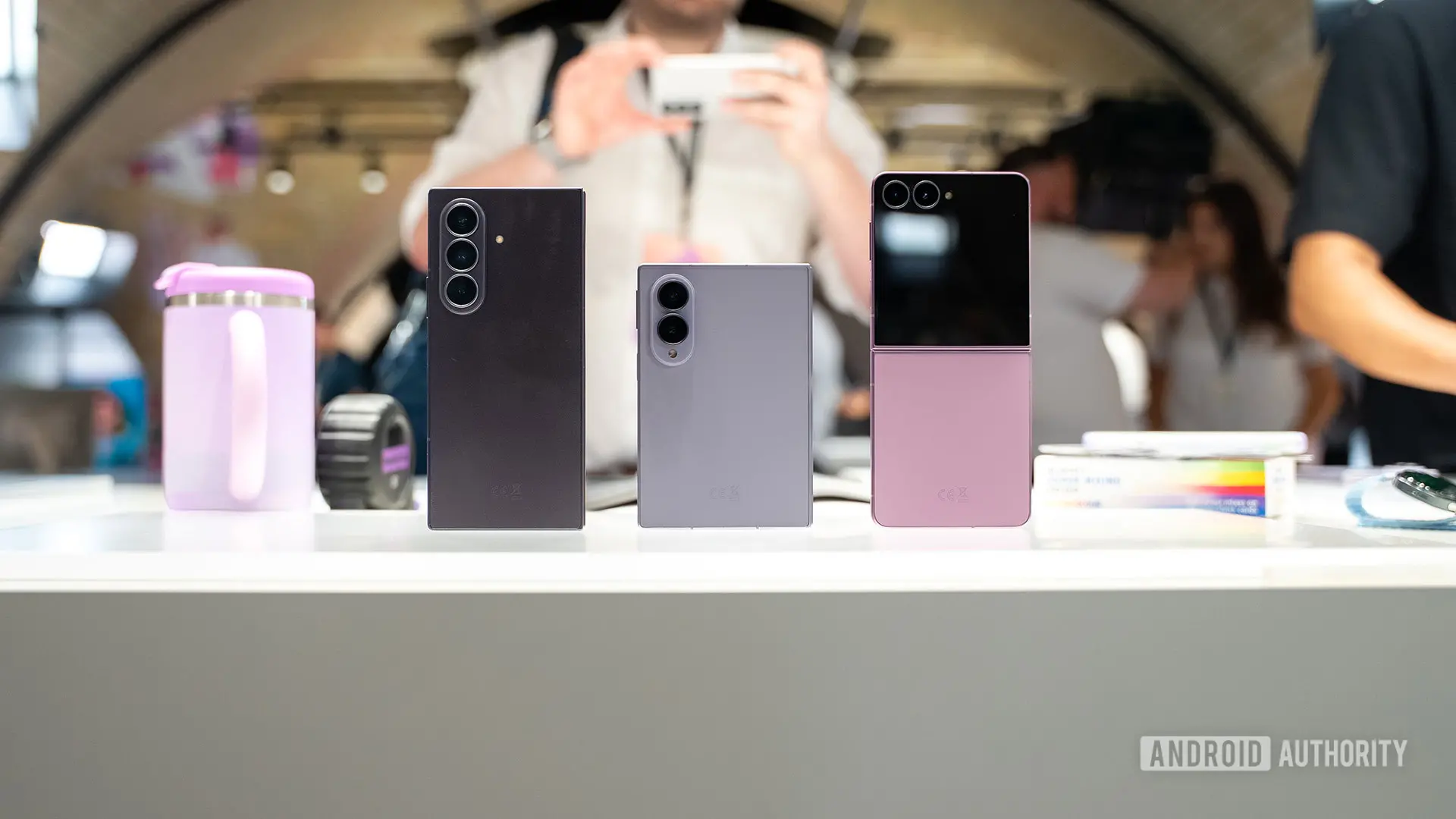
Samsung's latest foldable smartphones—the Galaxy Z Fold 8 Ultra, Galaxy Z Fold 8, and Galaxy Z Flip 8—have officially launched, and they come with a significant AI upgrade: Google's Gemini Nano 4 on-device model. This marks the first time any device runs Gemini Nano 4, the successor to the previous Gemini Nano models that powered earlier AI features on Pixel and Samsung devices.
What is Gemini Nano 4?
Gemini Nano 4 is Google's fourth-generation on-device AI model, built upon the foundation of the Gemma 4 family of models announced earlier this year. It is designed to run locally on the device, enabling fast, private, and context-aware AI processing without needing a cloud connection. According to Google's Android Developers Blog, Gemini Nano 4 supports over 140 languages, offers better multimodal understanding (meaning it can process text, images, and other inputs), and delivers improved performance over its predecessors.
The model powers a suite of features collectively called Gemini Intelligence, which Samsung has integrated into its One UI on the new foldables. Users can invoke Gemini Intelligence to automate real-world tasks such as ordering food, booking tickets, and more, all through natural language commands processed on the device.
Gemini Intelligence Features
Gemini Intelligence leverages Nano 4's capabilities to provide a range of productivity and convenience tools. One of the standout features is task automation: for example, a user can say "Order my usual pizza from Domino's" and Gemini Intelligence will interface with the Domino's app to complete the order. Similarly, booking movie tickets or setting appointments becomes a seamless voice-driven experience.
Another key feature is the new Gemini Notebook (formerly known as NotebookLM). This tool can take images, notes, PDFs, and other files and transform them into polished, structured information. It's essentially an AI-powered research and note-taking assistant that works entirely on the device.
Additionally, more Gemini Intelligence features are on the horizon. The "Create My Widget" feature will allow users to design custom widgets using Gemini Intelligence, tailoring their home screen appearance and functionality. Also expected is Gboard's "Rambler" dictation mode, which can convert rambling speech into coherent, well-structured text in real time.
The New Galaxy Foldables
The Galaxy Z Fold 8 Ultra is the flagship of the trio, featuring a slimmer design, a larger 5,000mAh battery, faster 45W charging, cameras borrowed from the Galaxy S26 Ultra, and a wide array of AI-powered features. It starts at $2,099.99.
The Galaxy Z Fold 8 adopts a wider book-style form factor for improved comfort, with a lighter body, 45W charging, the Snapdragon 8 Elite Gen 5 processor, and dual 50MP cameras. It is priced at $1,899.99.
The Galaxy Z Flip 8 is the most pocketable, with a thinner, lighter design, a 4,300mAh battery, and a smarter FlexWindow that now supports more apps and Gemini AI integration. Its price is $1,199.99.
All three devices are available for preorder now and will go on sale starting August 7, 2026.
Implications for On-Device AI
Gemini Nano 4's debut on Samsung's foldables signals a growing trend toward powerful on-device AI that can handle complex tasks without relying on the cloud. This has privacy benefits, as data stays on the device, and also enables offline usability. The support for over 140 languages makes the technology accessible globally. As more devices adopt Nano 4, we can expect a new wave of intelligent assistants that can perform real-world actions autonomously.
The partnership between Google and Samsung continues to deepen, with Samsung often being the first to integrate Google's latest AI innovations into its hardware. This arrangement benefits both companies: Google gets its models into millions of devices, and Samsung gains a competitive edge in AI features.
Background: The Evolution of Gemini Nano
Google introduced Gemini Nano in 2023 as part of its Gemini family of AI models, starting with Nano 1 on the Pixel 8 Pro. It enabled features like smart reply and on-device summarization. Nano 2 came with the Pixel 9 series, improving speed and accuracy. Nano 3 debuted on the Galaxy S25 series, adding multimodal support. Now Nano 4 brings even more advanced capabilities, including the task automation that requires tighter integration with apps.
The Gemma 4 models, which underpin Nano 4, are designed for efficiency and scalability, allowing them to run on smartphones with limited computational resources while still delivering high-quality outputs.
How Task Automation Works
Task automation on the new foldables relies on deep integration between Gemini Intelligence and Samsung's ecosystem of apps and services. When a user issues a command, Gemini Nano 4 processes the intent locally and then uses Android's app shortcuts and intents to trigger the appropriate action. For example, ordering food involves identifying the user's preferred service (e.g., Uber Eats), the restaurant, and the specific items, then sending the order via the app's API. This process happens nearly instantaneously, thanks to the optimized on-device inference of Nano 4.
Developers can also tap into Gemini Intelligence via APIs, allowing third-party apps to become actionable through voice commands. Samsung has opened up the Gemini Intelligence platform to key partners, ensuring a wide range of services are supported from launch.
Upcoming Features: Create My Widget and Rambler
Two particularly exciting features are still in the pipeline. "Create My Widget" will leverage the multimodal capabilities of Gemini Nano 4 to let users describe the widget they want—such as "a weather widget with a sunset background"—and generate it on the fly. This could revolutionize home screen customization.
Gboard's "Rambler" dictation mode is another anticipated addition. It will allow users to speak in a natural, even disorganized manner, and the AI will restructure the speech into clear, grammatically correct text. This can be a boon for note-taking, composing emails, or drafting documents without having to consciously organize thoughts while speaking.
Hardware and Design Highlights
Beyond AI, the new Galaxy foldables offer significant hardware upgrades. The Z Fold 8 Ultra is the thinnest and lightest Ultra foldable yet, with a 7.6-inch inner display and a 6.3-inch cover display, both with 120Hz refresh rates. The battery capacity increase to 5,000mAh addresses a common complaint about foldable endurance. The 45W charging is also a welcome improvement, bringing the Ultra in line with competitors.
The Z Fold 8, meanwhile, adopts a wider aspect ratio for the cover display, making it feel more like a traditional phone when folded. It also features an IP48 water resistance rating and improved hinge durability.
The Z Flip 8 continues to refine the clamshell form factor. Its 4,300mAh battery is the largest in a flip phone, and the FlexWindow has grown to 4 inches, allowing for more interactive notifications and quick replies without unfolding the device. The main camera setup includes a 50MP primary sensor and a 12MP ultrawide, both enhanced by AI processing.
Competitive Landscape and Market Impact
The introduction of Gemini Nano 4 on these devices puts pressure on competitors like Apple, which is also developing on-device AI models for its upcoming iPhones. However, Google and Samsung's close collaboration gives them a head start in integrating advanced on-device AI into foldable form factors. The ability to automate tasks without cloud dependency is a key differentiator, especially for users concerned about data privacy.
As the foldable market matures, AI features are becoming a primary selling point. Samsung's decision to debut Gemini Nano 4 exclusively on its foldables may drive more consumers to consider these premium devices over traditional slab phones. With preorders already open and a launch date of August 7, the new Galaxy Z series is poised to set the standard for AI-integrated smartphones for the next year.
Source: Android Authority News