

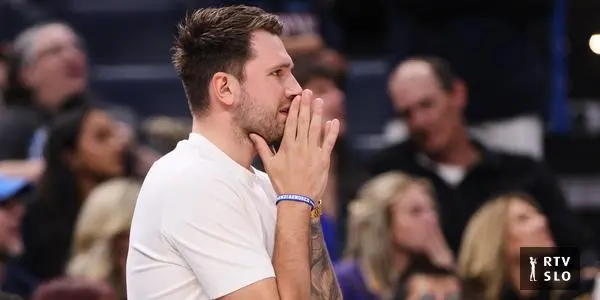
Anamaria Goltes, the former fiancée of NBA superstar Luka Dončić, has withdrawn her child support request against the basketball player, according to US media reports. The withdrawal was filed in Los Angeles, where Goltes had earlier lodged the request without, as reported, Dončić's knowledge. However, the court rejected the withdrawal because the document lacked the signature of Dončić, her former partner.
Goltes's decision to withdraw the request comes after months of legal wrangling between the former couple, who have two daughters together. In a statement included in the official documents, Goltes said: 'I withdraw the request for determination of child support with the aim of resolving the matter amicably and by mutual agreement, which will be in the best interest of our children.'
A Relationship That Spanned Nearly a Decade
Luka Dončić and Anamaria Goltes first met as children in Slovenia and began their romantic relationship in 2016. Their relationship became well-known as Dončić's star rose in European basketball and later in the NBA. In July 2023, Dončić proposed to Goltes, and the couple celebrated their engagement. They welcomed their first daughter, Gabriela, in December 2023, and their second daughter, Olivia, in December 2025. The family appeared to be thriving, with Dončić often sharing moments with his children on social media.
However, in March 2026, news broke that the engagement had been called off. The announcement shocked many fans, as the couple had seemed happy and were focused on raising their young family. Reports suggested that the split was amicable at first, but it soon escalated into a legal dispute.
The Legal Battle Begins
Shortly after the breakup, Goltes reportedly filed a request in Los Angeles seeking child support and reimbursement of attorney's fees. According to sources, the filing was made without Dončić's knowledge. The request focused only on financial support for the couple's two daughters, not on custody arrangements. This distinction became a key point of contention, as Dončić wanted a comprehensive resolution that included custody rights.
Dončić, who plays for the Los Angeles Lakers, spends the majority of the year in California because of his professional basketball career. Goltes, however, continues to reside in Slovenia with their two daughters. This geographic divide lies at the heart of the legal conflict.
Jurisdiction Dispute
From the outset, Dončić opposed the idea that a California court should decide the case. His legal team argued that the California court lacked jurisdiction because Goltes and the children do not live in the United States. They maintained that the proper venue for the case was Slovenia, where the family had previously established their home.
In legal filings, Dončić reportedly requested that Goltes's claim be dismissed on procedural grounds and legal insufficiency. His argument was that the children's habitual residence is Slovenia, not California, and therefore the Slovenian courts should have authority over matters of child support and custody.
The issue of jurisdiction is a common complication in cross-border family disputes, particularly when parents live in different countries. In this case, the complexity is compounded by Dončić's high-profile career in the NBA, which requires him to live in California for most of the year, while his children reside in Slovenia with their mother.
The Withdrawal and Its Implications
Goltes's withdrawal of her American child support request marks a significant development in the case. By withdrawing the request, she has effectively ended the US phase of the legal battle. According to reports, her stated intention is to settle the matter through mutual agreement, without having to rely on a foreign court.
However, the court's rejection of the withdrawal means that the case is not entirely closed. Because Dončić's signature was missing from the withdrawal request, the judge refused to accept it. This procedural hurdle suggests that both parties need to agree formally before the case can be dismissed.
Despite this setback, the withdrawal signals a potential shift toward a more cooperative approach between the former partners. It also means that the focus of the legal dispute now moves entirely to Slovenia, where Dončić had already filed a request for child support arrangements in February 2026.
What Dončić Wants
At the core of the dispute is not money, but the amount of time that Dončić can spend with his two daughters. The basketball star has expressed a strong desire for joint custody, saying he wants to be more involved in the lives of Gabriela and Olivia. He has consistently stated that his children are his top priority.
Dončić's commitment to his children is evident in his decision to skip the Slovenian national team's summer schedule for the first time in several years. Professional athletes often face difficult choices when balancing international duty and family responsibilities. In this case, Dončić has chosen to dedicate his summer to his daughters, hoping to strengthen his bond with them.
The former couple has two very young children: Gabriela, who will soon turn three, and Olivia, who is less than a year old. Legal experts note that custody arrangements for children of such young age require careful consideration of their developmental needs and stability. The geographic distance between parents makes such arrangements even more challenging.
A Complex Cross-Border Case
This case illustrates the complexities of international family law when parents are citizens of different countries or reside in different jurisdictions. Slovenia and the United States are both signatories to the Hague Convention on the Civil Aspects of International Child Abduction, which addresses custody disputes across borders. However, child support and custody cases are typically handled by the child's country of habitual residence.
Dončić's legal team has consistently argued that Slovenia is the appropriate jurisdiction because the children live there with their mother. By filing a request in Slovenia in February, Dončić sought to preempt the California proceedings and establish the Slovenian courts as the proper forum for the case.
According to reports, Dončić has been covering all expenses for his two daughters throughout the dispute. This financial support appears to continue regardless of the legal proceedings. The focus on the best interests of the children has been a repeated theme in Dončić's public statements and legal filings.
Career and Family Balance
Luka Dončić's career has reached unprecedented heights. After starting his professional career with Real Madrid, he moved to the NBA and quickly became one of the league's most talented players. He played for the Dallas Mavericks for several seasons before being traded to the Los Angeles Lakers in a blockbuster deal. His move to Los Angeles brought him closer to the entertainment industry and increased his global celebrity status.
However, his career has also created significant challenges for his personal life. The demands of an 82-game regular season, playoff runs, and international competitions leave little time for family. Dončić has spoken often about the importance of family, and his actions this summer – taking a break from national team duties – underscore his dedication to his children.
The Slovenian public has closely followed the story of Dončić and Goltes, from their engagement to the birth of their children and now the legal dispute. The case is seen as one of the most high-profile celebrity family battles in Slovenia's recent history.
What Happens Next
With the American portion of the case effectively ended – pending the court's formal acceptance of the withdrawal – all eyes now turn to Slovenia. Dončić's request for child support arrangement was filed in February, and the Slovenian court is expected to handle the matter in the coming months. The outcome will likely set the terms for custody and financial support that will affect the family for years to come.
Both Dončić and Goltes have expressed a desire to act in the best interest of their children. Whether they can reach a mutual agreement outside of court remains to be seen. The court's rejection of the withdrawal request demonstrates that legal formalities still need to be resolved, but the intention to settle amicably is a positive sign.
For Dončić, the summer of 2026 is a crucial period. He has made it clear that he wants to be a present father, and he has structured his schedule to ensure that he can spend time with his daughters. His fans will be hoping that the custody dispute resolves quickly and that he can return to the basketball court with a clear mind.
The case also highlights broader questions about how international athletes manage family life across borders. As more athletes play in foreign countries, custody and support disputes are becoming increasingly common. The Dončić-Goltes case could set a precedent for how such cases are handled in the future.
For now, the legal battle in the United States is on hold, and the focus has shifted to Slovenia. The coming weeks will reveal whether the former couple can reach a settlement that works for everyone, especially for their two young daughters.
Source: rtvslo.si News