





















How Do I Build an MVP for My Startup Without a Tech Background

Building a startup without a technical background is often perceived as a daunting challenge. However, countless successful products have been launched by non-technical founders through the strategic development of a Minimum Viable Product (MVP). An MVP is designed to test core assumptions with minimal resources, allowing valuable insights to be gathered before full-scale development is undertaken. By focusing on the essential features needed to solve a real problem, a simplified version of the product can be introduced to early users. Today, a wide range of no-code tools and platforms are being leveraged to bring ideas to life without writing a single line of code. Through proper planning, market validation, and lean testing, product ideas can be validated, refined, and even monetized.
In this guide, a step-by-step approach will be outlined, showing how an MVP can be built without any technical expertiseby using available tools, following proven methods, and focusing on real customer feedback.
1. Define & Validate the Problem
Before any MVP is developed, the problem must be clearly identified and validated. Real-world pain points should be uncovered by engaging potential users through interviews, surveys, or observations. Insights are typically gathered to confirm whether the problem is significant enough to warrant a solution. Validation is ensured when a pattern of shared frustration or unmet need is found among a specific user group. This step helps prevent time and resources from being spent on a product that may not be needed.
2. Conduct Market & Competitive Research
Thorough research should be conducted to understand existing market conditions and competitors. Similar solutions are reviewed to assess how user needs are currently being addressed. Key differentiators, pricing models, user complaints, and feature gaps are often analyzed. Trends are examined to determine if market demand is increasing or shifting. By knowing what is already available, a new product can be positioned more effectively. Business opportunities are maximized when underserved niches or inefficiencies are identified.
3. Define a Clear Value Proposition & Core Feature
The primary benefit of the product must be identified and clearly defined. A single, compelling value proposition is typically selected to guide MVP development. Only the core feature that delivers the essential value is included in the initial build. All non-critical elements are intentionally excluded to maintain focus. A well-defined value proposition ensures that users understand what problem is being solved and why it matters. Clarity in this step increases adoption and reduces confusion during early testing.
4. Choose Your MVP Type
The type of MVP to be built is chosen based on the products goals, budget, and required level of validation. Various optionslike landing pages, no-code apps, or concierge MVPsare commonly used to simulate the product experience. Some MVPs are delivered manually to test demand before automation is introduced. Others are made interactive using tools that require little to no technical skill. The right type is selected by weighing time, effort, and data collection potential.
5. Prototype and Sketch the User Journey
A visual prototype of the product should be created to map out the user experience. Low-fidelity wireframes or mockups are often used to simulate navigation and functionality. Common tools like Figma or Canva are typically utilized to sketch out screens and flows. The user journey is then reviewed to ensure that friction points can be identified and resolved early. By focusing on the experience, usability is improved before resources are invested in actual development.
6. Build Using No?Code/Low?Code Tools
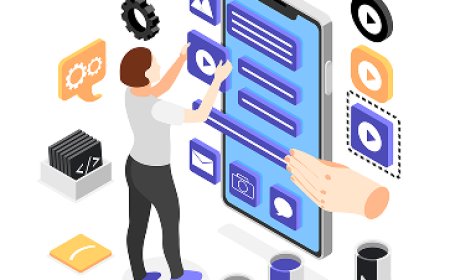
No-code and low-code platforms are increasingly used to build MVPs by non-technical founders. Tools like Bubble, Glide, and Webflow are employed to create functional prototypes without the need for programming. Backend workflows and databases are often set up using Airtable or Zapier. This approach allows MVPs to be built and tested quickly. Functionality is prioritized over polish, and features are added based on feedback. A custom software development company in South Africa may also be consulted if complexity increases.
7. Test With Real Users
Once the MVP is ready, it should be tested with real users from the target market. Usability is observed through live sessions or recorded interactions. Feedback is collected through surveys, direct interviews, or analytics tools. Reactions, frustrations, and user behavior are studied to refine features and improve experience. Assumptions are validated through actual usage, rather than internal opinions. A strong testing process ensures that the product is shaped by real-world needs.
8. Define Metrics & Iterate Regularly
Key performance indicators (KPIs) must be defined to measure MVP success. Metrics like user retention, engagement, activation, and conversion are tracked. Data is gathered to understand what features are working and what should be revised. Regular iterations are conducted based on quantitative and qualitative insights. Updates are made to address pain points and improve outcomes. By relying on metrics, product evolution is guided by evidence, not assumptions, ensuring long-term growth potential.
9. Engage With a Tech Partner or Outsource (if needed)
When the MVP outgrows no-code tools, collaboration with technical experts may be required. Freelancers or development agencies can be engaged to extend functionality. Due diligence is performed to ensure alignment with business goals and timelines. Communication is maintained through regular updates and reviews. Outsourcing is often chosen to scale development affordably while focusing internal efforts on strategy and marketing. This step ensures that technical needs are met as the product matures.
10. Communicate & Manage Progress Effectively
Clear communication and project management are essential for MVP success. Weekly check-ins, demos, and updates should be scheduled to track progress. Collaboration tools such as Trello, Slack, or Notion are commonly used to manage tasks and timelines. Feedback is continuously incorporated to align deliverables with user needs. Risk is minimized through transparency and iterative development. When expectations and progress are clearly communicated, team alignment is maintained throughout the MVP lifecycle.
11. Build Community & Launch Smart
A small community of early adopters should be nurtured before the MVP is launched. Interest is generated through email lists, landing pages, or social platforms. Feedback loops are created to encourage engagement and improve the product. Launches are timed and messaged carefully to test product-market fit. Users are invited to participate in the products evolution. A strong early community ensures that insights are gained, momentum is built, and long-term loyalty is fostered.
Conclusion
Building an MVP without a tech background is no longer a barrier to innovationit is an opportunity to test, learn, and grow lean. By validating the problem, defining your core value, using no-code tools, and gathering real feedback, a functional product can be brought to market quickly and cost-effectively. Strategic partnerships can also be explored as the product scales. If further technical development is required, support can be sought from acustom software development company in South Africa, where local expertise is often combined with global delivery standards. By following a structured approach, non-technical founders can confidently move from idea to implementationfaster, smarter, and with less risk.