

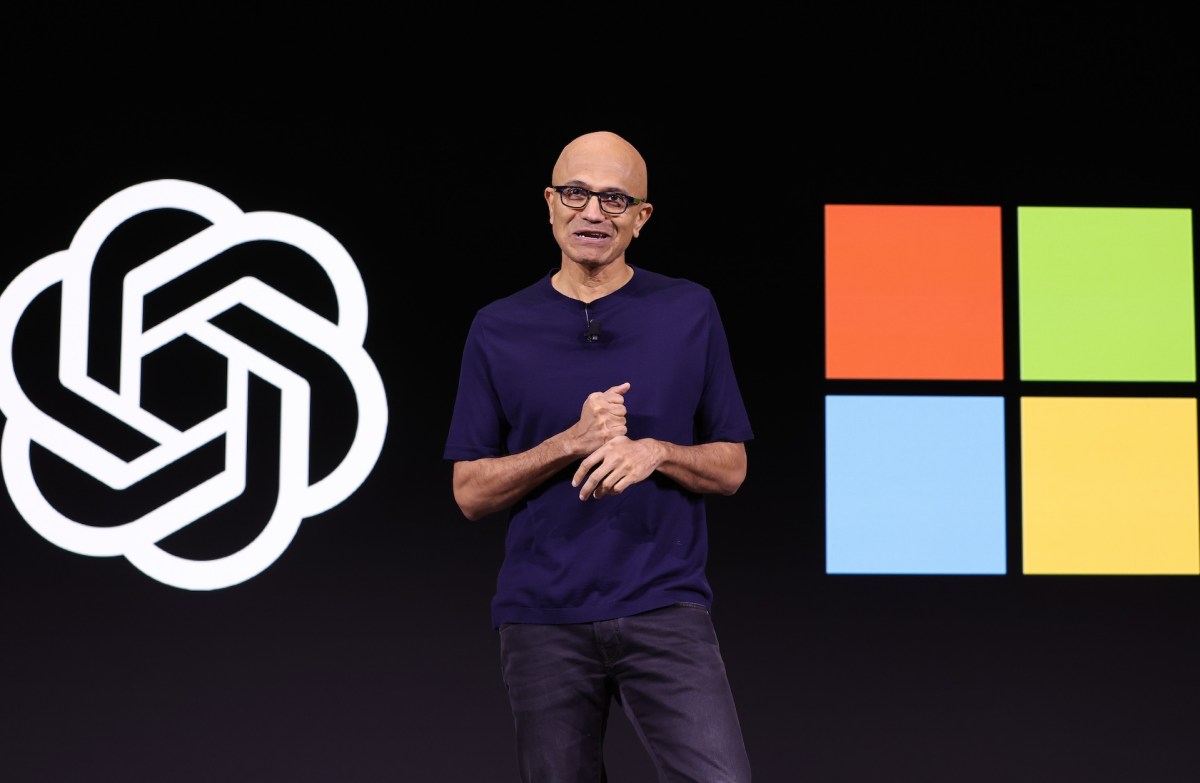
Microsoft CEO Satya Nadella has issued a stark warning to enterprises leveraging artificial intelligence: they are paying twice for the technology — once in direct costs, and again by surrendering their most valuable data. In a blog post published Sunday, Nadella argued that AI model providers are operating like Trojan horses, gaining access to sensitive business information that could eventually allow them to compete against their own customers.
The concern is not new. Venture capitalists such as Jason Calacanis and Palantir CEO Alex Karp have previously voiced similar fears. But Nadella’s intervention carries weight because Microsoft is itself a major player in the AI landscape, having invested billions in OpenAI and collaborated with Anthropic. His message underscores a growing unease within the tech community about the power dynamics between AI labs and the enterprises that rely on their models.
The Double Payment Dilemma
Nadella explained that companies knowingly pay for token usage — the computational cost of querying a model. However, they also, often unconsciously, hand over proprietary knowledge through the very process of using the model. "You essentially pay for intelligence twice," he wrote, "once with money, and again with something even more valuable: the proprietary knowledge you must reveal to make that intelligence useful."
Every prompt, every correction, and every interaction with the model becomes training data that the provider can learn from. Even simple refinements, such as a user telling the model it produced an incorrect output, feed into what Nadella calls "exhaust" — the byproduct of human feedback. Over time, these interactions create a detailed picture of the enterprise’s internal operations, competitive strategies, and institutional knowledge.
This is not hypothetical. In February, Anthropic accused Chinese open-source models of sending millions of prompts to Claude in an effort to distill its capabilities. Nadella pointed out the hypocrisy: model makers demand the right to train on public internet data while simultaneously imposing restrictions on customers who wish to do the same with the providers' own models. "While the great innovation that comes from model providers having fair use rights to train models on public data is needed," he wrote, "I find it ironic that the status quo is to then turn around and impose restrictive terms on distillation."
Distillation and the Control of Knowledge
Distillation — the practice of using a model’s outputs to train a cheaper, smaller, or custom model — is at the heart of the debate. Companies like OpenAI and Anthropic have fought against unauthorized distillation, arguing that it undermines their intellectual property. But Nadella insists that if AI labs can scrape the entire web to build their models, enterprises should be allowed to learn from those models in return. "It’s only fair that enterprises get to study—or 'distill'—those models in return," he argued.
The issue touches on deep questions of data ownership and the future of AI economics. Currently, most proprietary models are offered through APIs, where every query is logged. Nadella warned that model makers "reserve the right to learn from customer usage and interaction data," giving them a direct pipeline to enterprise secrets. He believes this creates an existential risk: the AI provider could eventually become a competitor, using the knowledge gained from one customer to benefit another — or themselves.
Nadella’s Proposed Solution
As the CEO of Microsoft, a company that operates one of the largest cloud platforms in the world, Nadella’s solution is predictably cloud-centric. He urged enterprises to "retain ownership" of all their data, including prompts, feedback, and corrections. The way to do that, he suggested, is to build "proprietary learning environments" on the cloud — environments where the data stays under the customer’s control and is not siphoned by the model provider.
He also advocated for what he called "orchestration layers" — middleware that allows companies to switch between different AI models without being locked into a single provider. Tools like AI gateways, which already exist from companies such as Vercel and Solo.io, enable enterprises to route requests to the best model for a given task while keeping data inside their own infrastructure. "In consuming intelligence, you are creating intelligence," Nadella wrote. "And what you create should belong to you."
The Shift to Open-Source and On-Premise
Although Nadella never explicitly mentioned the term "open source," the subtext was clear: proprietary models come with strings attached. His warning aligns with a broader movement of enterprises moving away from closed models toward open-source alternatives that can be run on their own premises. Companies that once experimented with GPT-4 or Claude are now asking whether they can achieve 90% of the performance with a local open-source model at a fraction of the cost — and with full control over their data.
Idit Levine, founder and CEO of Solo.io, a company that provides networking and security software for AI systems, has observed this shift firsthand. Her customers, which include large enterprises such as T-Mobile, ADP, and SAP, are increasingly choosing on-premise open-source models. "Can I take an open source model and run it on-prem? It will do almost 90% of what the big one’s doing. It will cost way less," she told TechCrunch. "They understand that, and they can control it."
Solo.io’s technology was selected by the Linux Foundation to power its Agentgateway project, a sign of the growing demand for open-source AI infrastructure. Other companies are also seeing similar trends. Vercel, best known for its website hosting platform, recently added AI model-switching tools and reported that open models accounted for 29% of all traffic through its gateway last month. OpenRouter, a startup that helps developers route requests across different AI models, has also experienced a surge in open model usage.
Historical Context and Broader Implications
Nadella’s warning comes at a time when the AI industry is grappling with fundamental questions about data rights, competition, and trust. The market for AI models is increasingly dominated by a handful of large labs — OpenAI, Anthropic, Google DeepMind, and Meta — each with access to enormous computational resources and data. Smaller companies and startups are understandably wary of becoming too dependent on these providers, especially after incidents like the abrupt changes in API pricing or service terms that have occurred in the past.
Microsoft itself has a complex relationship with open-source. While the company was once a vocal critic of open-source software, under Nadella’s leadership it has embraced Linux, acquired GitHub, and contributed to numerous open-source projects. Yet Microsoft also has deep ties to proprietary AI through its partnership with OpenAI, which it has funded to the tune of billions. Nadella’s blog post can be seen as an attempt to balance these two sides — encouraging enterprises to use the cloud (preferably Azure) while acknowledging the risks of proprietary lock-in.
The stakes are enormous. If enterprises continue to feed their proprietary data into closed models, they risk ceding their competitive advantages to the very companies they are paying. On the other hand, open-source models are often less capable out of the box and require significant engineering effort to fine-tune and maintain. However, the gap is narrowing. Meta’s Llama 3, Mistral’s models, and other open-source alternatives have achieved impressive performance, and many industry watchers believe that open-source will play a dominant role in enterprise AI within the next few years.
Industry Reactions and Future Outlook
Nadella’s post has generated widespread discussion among AI practitioners and executives. Some have praised him for speaking candidly about a risk that many have suspected but few have voiced publicly. Others have pointed out the irony: Microsoft itself sells access to proprietary models through Azure OpenAI Service, and its own practices regarding customer data have been questioned in the past.
Nevertheless, the trend toward open-source and on-premise AI seems likely to accelerate. The combination of cost savings, data control, and flexibility is compelling for large enterprises that handle sensitive information in regulated industries like finance, healthcare, and government. As Levine noted, once companies run the numbers and consider the risks, the choice becomes clear.
Nadella concluded his post with a call to action that resonated across the industry: "You are not just a consumer of intelligence. In consuming intelligence, you are creating intelligence. And what you create should belong to you."
Source: TechCrunch News